
What's Happening?
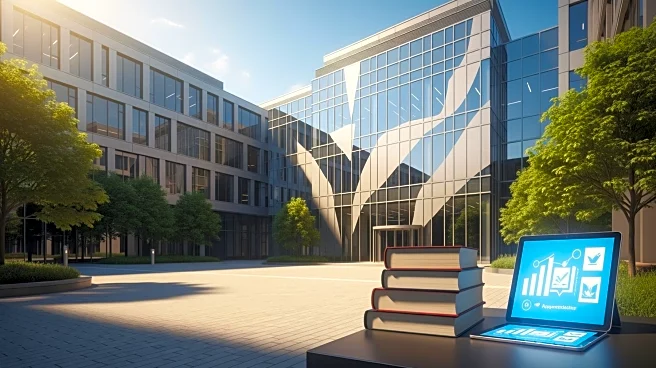
Higher education leaders are reimagining campus facilities to adapt to evolving academic demands. As learning styles and student demographics shift, and technology continues to reshape expectations, institutions are focusing on creating tech-driven, sustainable,
and personalized environments. The 12th Annual State of Facilities in Higher Education report indicates that many institutions are pausing major expansions to reassess long-term operational strategies. This strategic pause is aimed at aligning maintenance, repair, and operations projects with institutional missions, thereby transforming existing spaces into tech-enabled environments that enhance connectivity and reduce energy costs. Gordian’s RSMeans Data, a longstanding construction cost database, provides benchmarks for budgeting these campus transformation projects, offering localized square-foot costs for over 100 building models.
Why It's Important?
The shift in focus towards sustainable and tech-enabled campus facilities reflects broader trends in higher education, where institutions are under pressure to optimize resources and meet the changing needs of students. By investing in flexible infrastructure, colleges and universities can enhance their appeal to prospective students and faculty, potentially improving enrollment and retention rates. This strategic realignment also allows institutions to manage costs more effectively, particularly in an era where financial constraints are common. The use of reliable data from Gordian’s RSMeans can help institutions make informed decisions about future construction projects, ensuring that investments are both cost-effective and aligned with educational goals.
What's Next?
As institutions continue to reassess their infrastructure strategies, there may be increased collaboration with architects and engineers to develop innovative solutions that meet the dual goals of sustainability and technological advancement. Future projects are likely to focus on retrofitting existing spaces rather than new construction, maximizing the use of current resources. Additionally, as government policies and funding priorities evolve, institutions may need to adapt their strategies to align with new regulations and opportunities for financial support. The ongoing dialogue between educational leaders and construction professionals will be crucial in navigating these changes.