


What's Happening?
EPA Administrator Lee Zeldin is leading efforts to redefine the scope of the federal clean water law, specifically aiming to reduce the wetlands protected under the 'waters of the United States' (WOTUS) definition. This initiative follows a 2023 Supreme
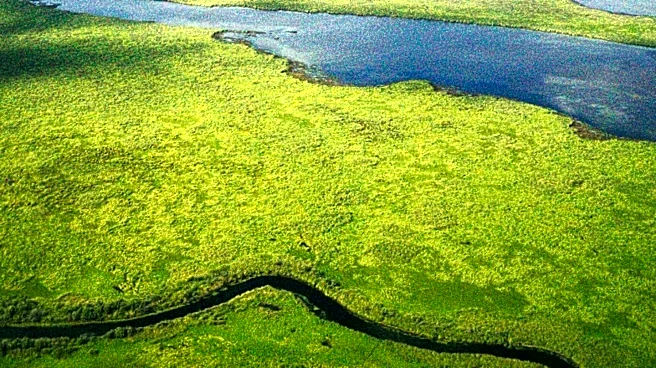
Court ruling in Sackett v. EPA, which significantly limited federal authority over water pollution in certain wetlands. The proposed rule focuses on relatively permanent, standing, or continuously flowing bodies of water, such as streams, oceans, rivers, and lakes, along with wetlands directly connected to them. The EPA and Army Corps of Engineers have announced a Supplemental Notice of Proposed Rulemaking to gather additional public input for 30 days once published in the Federal Register. Zeldin states that the EPA's goal is to establish a durable WOTUS definition that adheres to the law and reduces regulatory uncertainty, aiming to provide greater predictability for various stakeholders including landowners, farmers, ranchers, energy producers, and small businesses. He disputes claims that the proposal would eliminate protection for freshwater wetlands, asserting it balances federal and state authority, with lands removed from federal jurisdiction still subject to state and tribal regulations.
Why It's Important?
This redefinition of WOTUS carries significant implications for environmental protection, economic development, and the balance of power between federal and state authorities in the U.S. Limiting federal oversight on wetlands could potentially open up vast areas for development, benefiting industries such as agriculture, energy, and real estate by reducing regulatory hurdles and associated costs. However, environmental groups argue that this move could lead to the destruction of critical freshwater wetlands, impacting biodiversity, water quality, and increasing vulnerability to climate change-driven storm surges. The proposal reflects a broader effort by the current administration to roll back environmental regulations, which proponents argue will accelerate economic prosperity by cutting 'bureaucratic red tape.' Critics, however, view it as a 'giveaway' to industrial polluters and a threat to vital ecosystems. The outcome will determine the extent of federal responsibility in protecting water resources and could shift more of that burden, and associated costs, to state and tribal governments.
What's Next?
The EPA and Army Corps of Engineers will accept public comments for 30 days once the supplemental plan is published in the Federal Register. This period will allow a wide range of stakeholders, including environmental organizations, industry groups, state and tribal governments, and the general public, to provide feedback on the proposed regulatory language. The agencies have already held three public meetings and received over 220,000 comments on the initial proposal, indicating significant public interest and contention. Following the comment period, the EPA and Army Corps will evaluate the input received as they work towards finalizing the WOTUS definition. The final rule is expected to fully implement the Supreme Court's Sackett decision. The implementation of this new rule will likely face further legal challenges from environmental groups, who have historically opposed such rollbacks, potentially leading to prolonged litigation and continued uncertainty regarding the scope of federal clean water protections.
Beyond the Headlines
The ongoing debate over the WOTUS definition highlights a fundamental tension between economic development and environmental conservation in the U.S. This regulatory shift could set a precedent for how future environmental policies are shaped, potentially influencing other areas of federal oversight. The emphasis on 'durable' definitions and 'regulatory certainty' by the EPA suggests a desire to create long-lasting policies that are less susceptible to political changes, yet the contentious nature of this issue indicates that achieving broad consensus will be challenging. Furthermore, the argument that states and tribes are 'best positioned' to manage their own water resources raises questions about the capacity and funding available at the local level to effectively protect wetlands, especially in the face of potential increased development pressures. This move could also deepen the ideological divide on environmental policy, with implications for future legislative and judicial actions concerning natural resource management and climate change mitigation.