





What's Happening?
James Sternberg, an assistant professor in Clemson University’s Department of Food, Nutrition and Packaging Sciences, is spearheading a research project focused on creating more sustainable plastic packaging. Supported by a five-year award from the National
Science Foundation’s Faculty Early Career Development (CAREER) Program, the initiative aims to develop biodegradable plastics, enhance recycling technologies, and educate future scientists in sustainable materials. The project challenges the traditional 'make it, use it, throw it away' model by designing materials with their entire lifecycle in mind, from performance during use to disposal. This includes developing safer plastics from renewable resources that can biodegrade through composting, creating foams that can be manufactured more safely at room temperature, and improving the value and performance of recycled PET and PLA plastics. Researchers are exploring materials derived from crops, vegetable oils, glycerol, lignin, cellulose, and forestry products to create new types of films, foams, and adhesives that can effectively break down in composting systems. The team is also investigating methods to improve recycled polyethylene terephthalate (PET) and polylactic acid (PLA) by replacing traditional recycling chemicals with renewable alternatives, aiming to produce recycled plastics with enhanced value and performance.
Why It's Important?
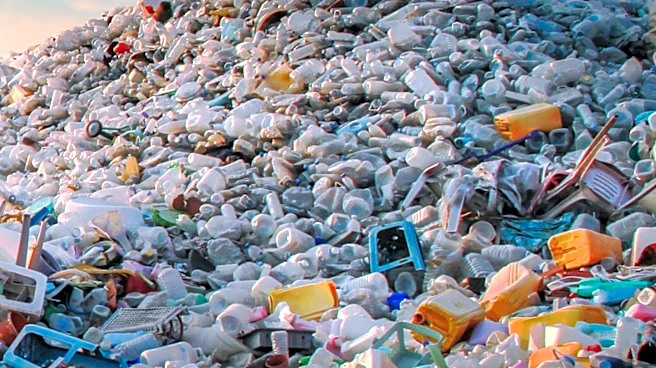
This research is crucial for addressing the growing problem of plastic waste, which has more than doubled globally in the past two decades, with packaging being a significant contributor. By focusing on a circular economy model, where materials are reused, recycled, or composted, the project seeks to reduce the environmental impact of plastics that currently end up in landfills for decades. The development of biodegradable plastics and improved recycling methods could lead to substantial reductions in waste and pollution, benefiting ecosystems and public health. Furthermore, enhancing the performance and value of recycled plastics like PET and PLA could make them more economically attractive to manufacturers, fostering a more sustainable industry. The exploration of agricultural and forestry-based materials for new plastics also presents opportunities for producers in these sectors, potentially creating new markets and revenue streams. The project's emphasis on training the next generation of scientists ensures a continued focus on sustainable solutions, building a workforce capable of tackling future environmental challenges in material science and packaging.
What's Next?
The Clemson University team plans to continue its research into developing plant-based, biodegradable adhesives and improving the performance of recycled plastics. Doctoral student Marzieh Akrami is specifically working on plant-based adhesives for produce labels, focusing on their effectiveness and sustainable degradation. The project also includes broader educational and outreach initiatives, such as mentoring opportunities, webinars, and educational resources for high school students and teachers. Hands-on research experiences will be provided for Clemson students, fostering practical skills in sustainable material development. The team intends to share its findings with industry professionals to facilitate the adoption of reusable, recyclable, and compostable packaging options. The goal is to shape a future where packaging effectively serves consumers without becoming a long-term environmental burden, with ongoing efforts to translate research into practical applications and industry standards. The National Science Foundation's CAREER Program support ensures a sustained effort over five years, indicating a long-term commitment to these research and educational objectives.
Beyond the Headlines
The initiative at Clemson University extends beyond immediate material innovation by addressing the systemic issues within the plastic industry. By focusing on the entire lifecycle of packaging, from design to disposal, the project challenges the linear 'take-make-dispose' economic model that has dominated manufacturing for decades. This shift towards a circular economy not only mitigates environmental damage but also encourages a re-evaluation of resource consumption and waste management practices. The ethical implications of plastic pollution, particularly its impact on marine life and human health through microplastics, underscore the urgency of this research. Legally, stricter regulations on plastic waste and single-use plastics are emerging globally, making the development of sustainable alternatives increasingly vital for businesses to comply and remain competitive. Culturally, there is a growing consumer demand for eco-friendly products, which this research aims to meet by providing viable and high-performing sustainable packaging solutions. The project's educational component is critical for fostering a new generation of scientists and engineers who are inherently trained in sustainable design principles, ensuring that future innovations are built on a foundation of environmental responsibility.