


What's Happening?
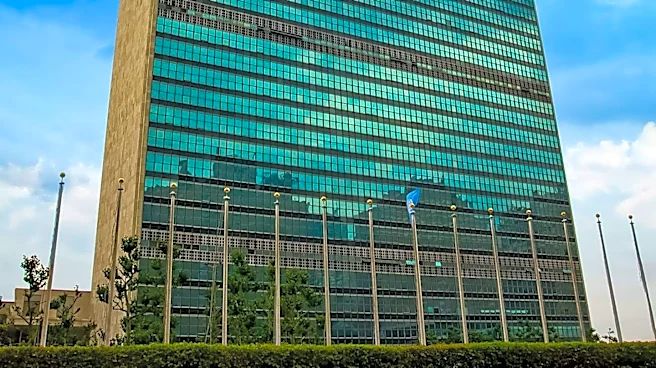
The Lowy Institute has underscored the continued relevance and strategic importance of non-permanent membership in the UN Security Council. Despite criticisms regarding its outdated structure, the institute notes that these rotating seats offer significant
benefits. For small states, non-permanent membership provides crucial visibility and a platform to address issues they deem important on a global stage. For middle and rising powers, it serves as a recognition of their status and an opportunity to demonstrate leadership. The institute points out that non-permanent members, though lacking the veto power of the permanent five (China, France, Russia, the United Kingdom, and the United States), can assume the rotating monthly presidency. This position allows them to convene meetings, shape the agenda, preside over debates, and draw international attention to specific concerns. Recent presidencies by countries like Malta, Mozambique, Gabon, Ghana, Kenya, and Guyana exemplify how smaller and developing nations can leverage this role to exercise diplomatic leadership within the world's foremost security forum. The system of rotating membership, expanded in 1963 from six to ten non-permanent seats, acts as an institutional safety valve, broadening participation without diminishing the privileged position of the permanent members.
Why It's Important?
The Lowy Institute's analysis highlights a critical aspect of international diplomacy and global governance. The continued pursuit of non-permanent Security Council seats by numerous nations, despite the significant resources invested in campaigning, underscores the perceived value of this 'second-class seat.' For the United States and other permanent members, this system is vital for maintaining the legitimacy and resilience of the UN Security Council. By allowing broader participation, it helps to mitigate criticisms of the Council's exclusive nature and the concentration of power among the P5. This inclusivity can foster greater international cooperation and burden-sharing on global security issues, which is beneficial for U.S. foreign policy objectives. For smaller and developing states, gaining a seat offers a rare opportunity to influence global narratives and advocate for their national interests, potentially leading to more equitable international policies. The visibility and leadership credentials gained can also enhance a nation's diplomatic standing and influence in other international forums, indirectly impacting U.S. bilateral and multilateral relations. The system, therefore, acts as a crucial mechanism for balancing power dynamics and ensuring a degree of representation within the UN's most powerful body.
What's Next?
The Lowy Institute's observations suggest that the competition for non-permanent seats on the UN Security Council will continue to be intense. Nations like India and Australia are already reaffirming support for each other's candidacies for future terms, indicating the ongoing strategic importance placed on these positions. This sustained interest will likely lead to continued diplomatic efforts and resource allocation by aspiring member states. Furthermore, the institute's mention of calls for urgent reform of the Security Council, including greater permanent and non-permanent representation, indicates that discussions about the Council's structure are ongoing. While significant changes to the permanent membership are challenging due to the veto power, there may be continued pressure to expand the non-permanent category or adjust its functions to better reflect contemporary global power dynamics. The U.S. and other permanent members will likely continue to navigate these reform discussions, balancing the need for institutional legitimacy with their own strategic interests in maintaining the current power structure.
Beyond the Headlines
Beyond the immediate diplomatic advantages, the Lowy Institute's insights reveal deeper implications for global power structures and the evolution of international relations. The enduring appeal of non-permanent seats, despite their limitations, speaks to a fundamental desire among nations for recognition and a voice in global decision-making. This phenomenon highlights the symbolic power of institutions like the UN Security Council, where even a temporary presence can confer legitimacy and influence. It also underscores the complex interplay between hard power (military and economic might) and soft power (diplomatic influence and moral authority) in shaping international outcomes. For the U.S., understanding this dynamic is crucial for effective multilateral engagement. The system, while imperfect, serves as a critical pressure release valve, allowing a broader range of states to feel invested in the international order, thereby potentially reducing the likelihood of unilateral actions or the formation of alternative, competing global governance structures. The ongoing debate about Security Council reform, fueled by the aspirations of middle and rising powers, reflects a broader global shift towards a more multipolar world, where traditional power hierarchies are increasingly challenged.