



What's Happening?
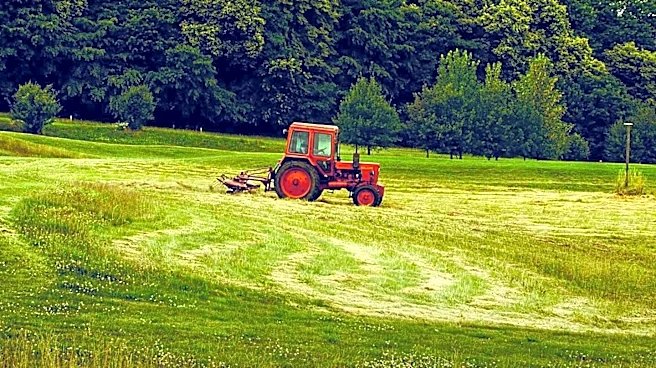
In Durham, Connecticut, a community debate has arisen over the appropriate timing for mowing a town-owned field at Frederick White Farm. The controversy centers around the impact of mowing on the nesting habitats of bobolinks, a bird species that migrates
to the area. Some residents argue for delayed mowing to protect wildlife, while others advocate for regular mowing to support agricultural activities and reduce maintenance costs. The town's decision to mow earlier than usual this year has sparked criticism and highlighted the challenge of balancing conservation efforts with agricultural needs.
Why It's Important?
This debate reflects broader tensions between wildlife conservation and agricultural practices, a common issue in rural communities. The outcome of this discussion could influence local policies on land use and conservation, potentially setting a precedent for other towns facing similar challenges. The decision impacts not only the local ecosystem but also the agricultural economy, as farmers rely on timely hay production. The community's response may also affect public perception of conservation efforts and the prioritization of environmental versus economic interests.
What's Next?
The Durham Conservation Commission is expected to address the issue in its upcoming September meeting, where further discussions will likely take place. Stakeholders, including local farmers, conservationists, and residents, will continue to voice their opinions. The commission may consider adopting formal policies to guide future mowing practices, balancing the needs of wildlife preservation with agricultural productivity. The outcome could lead to new guidelines that accommodate both environmental and economic concerns, potentially involving compromises or innovative solutions.