
What's Happening?
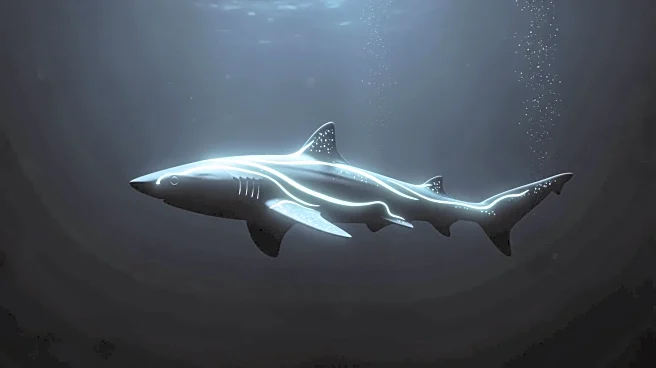
The American pocket shark, a miniature predator measuring just 5.5 inches, has been discovered to glow in the dark due to built-in light organs. This species was first collected in the Gulf of Mexico during
a 2010 research cruise but was only recently identified as a new species. The discovery was led by Mark A. Grace, a fisheries biologist at NOAA Fisheries in Mississippi. The shark is part of a rarely seen group, with only one other known specimen from the Pacific. The American pocket shark features photophores, tiny organs that produce light, and has unique anatomical features such as small cavities near its gills. Researchers used advanced imaging techniques to study the shark without damaging it, confirming its distinction from its Pacific relative.
Why It's Important?
The discovery of the American pocket shark highlights the vast unknown biodiversity in the Gulf of Mexico, an area heavily utilized for shipping and fishing. This finding underscores the importance of marine research and the potential for discovering new species in underexplored ocean regions. The glowing ability of the shark may provide insights into bioluminescence, a common trait among deep-sea creatures used for communication and camouflage. Understanding these mechanisms can enhance knowledge of marine ecosystems and inform conservation efforts. The research also demonstrates the value of collaboration between institutions and the use of non-invasive technologies in studying rare species.
What's Next?
Further research is needed to understand the ecological role and behavior of the American pocket shark in its natural habitat. Scientists may conduct additional surveys in the Gulf of Mexico to locate more specimens and study their interactions with the environment. The findings could lead to broader studies on bioluminescence and its applications. Conservationists may also advocate for increased protection of deep-sea habitats to preserve undiscovered species. Continued collaboration between NOAA and academic institutions will be crucial in advancing marine biodiversity research.
Beyond the Headlines
The discovery of the American pocket shark raises questions about the impact of human activities on deep-sea ecosystems. As offshore drilling and fishing expand, the risk of disrupting these habitats increases. The glowing shark serves as a reminder of the delicate balance in marine environments and the need for sustainable practices. Additionally, the use of advanced imaging techniques in this research highlights the potential for non-invasive methods in studying rare and endangered species, which could revolutionize conservation strategies.