

What's Happening?
The European Union is seeking to coordinate with G7 countries on a proposed ban on maritime services that support Russia's seaborne crude oil exports. This initiative, announced by the EU's sanctions envoy, aims to cut off a significant source of revenue
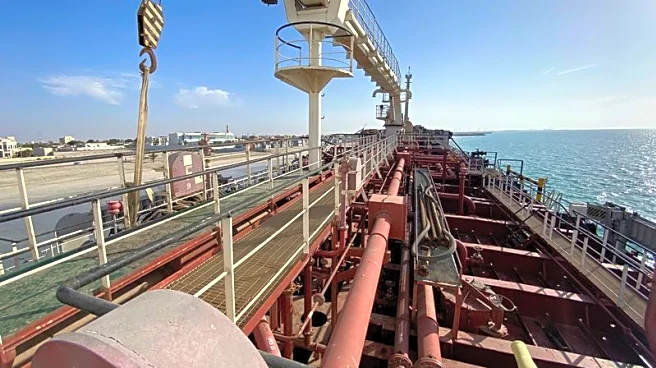
for Russia, which is currently engaged in a conflict with Ukraine. The EU's proposal, made on February 6, 2026, suggests a comprehensive ban that would extend beyond previous sanctions. The EU has already reduced the oil price cap to $44 a barrel, significantly impacting Russia's oil and gas revenue. The proposed ban would primarily affect Western tankers, which transport over a third of Russia's oil, mainly to India and China. The EU is particularly concerned about securing U.S. support for this measure, as coordination with G7 countries is deemed crucial before any decision is finalized.
Why It's Important?
The proposed maritime services ban is significant as it represents a strategic effort by the EU to further isolate Russia economically by targeting its oil export capabilities. This move could potentially disrupt Russia's oil supply chain, affecting global oil markets and prices. The ban could also pressure Russia to reconsider its actions in Ukraine by cutting off a major source of funding. For the U.S., which has not fully aligned with the EU on this issue, the decision to support the ban could influence its geopolitical stance and relations with both European allies and Russia. The outcome of this coordination effort could set a precedent for future international sanctions and economic measures against countries involved in conflicts.
What's Next?
The EU plans to hold discussions with G7 countries in the coming days and weeks to finalize the details of the proposed ban. Key issues to be addressed include the phasing in of the ban and whether it will extend to refined products and other energy exports like liquefied natural gas. The EU will need to navigate diplomatic challenges, particularly in securing U.S. support, which is seen as pivotal for the success of the initiative. The outcome of these discussions will determine the timeline and scope of the ban, as well as its potential impact on global oil markets and international relations.