






What's Happening?
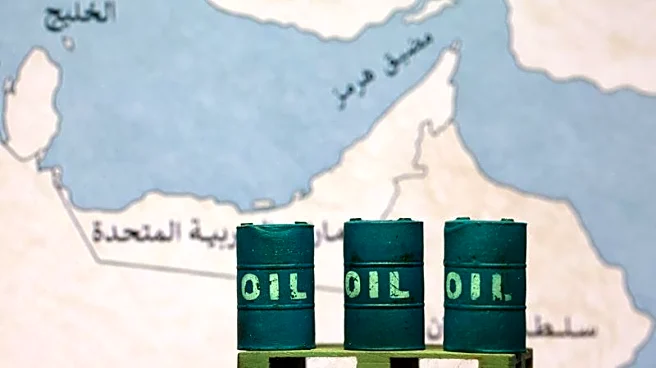
Oil prices have fallen sharply as concerns over supply disruptions in the Middle East and Black Sea regions ease. Brent crude dropped more than 9% intraday, stabilizing around $90 per barrel, while West Texas Intermediate also declined. The U.S. has paused
military strikes against Iran, reducing immediate concerns about further disruptions to regional oil flows. Additionally, crude loadings have resumed at the Caspian Pipeline Consortium terminal on Russia's Black Sea coast, alleviating fears of supply disruptions to European markets. Despite the selloff, crude futures remain up roughly 20% this month due to ongoing Middle East conflicts.
Why It's Important?
The easing of supply concerns in key oil-producing regions is significant for global energy markets, as it reduces the geopolitical risk premium that has driven recent price increases. The resumption of crude loadings in the Black Sea and the pause in U.S.-Iran hostilities contribute to market stability, potentially lowering energy costs for consumers and businesses. However, the ongoing conflict in the Middle East continues to pose risks to global trade routes, highlighting the need for strategic planning and diversification in energy sources. The situation underscores the interconnectedness of global energy markets and the impact of geopolitical events on economic stability.
What's Next?
The future of oil prices will depend on the resolution of geopolitical tensions in the Middle East and the stability of supply routes in the Black Sea. Continued diplomatic efforts between the U.S. and Iran could lead to a more permanent de-escalation, further stabilizing energy markets. The international community will likely monitor developments closely, with potential implications for global energy policies and security strategies. The outcome of these efforts could influence future energy market dynamics and the global economic landscape.