



What's Happening?
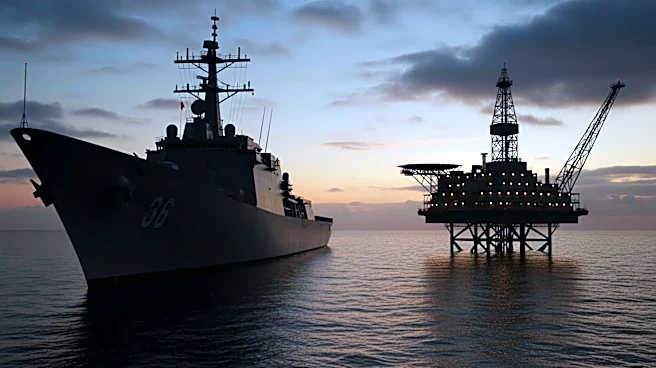
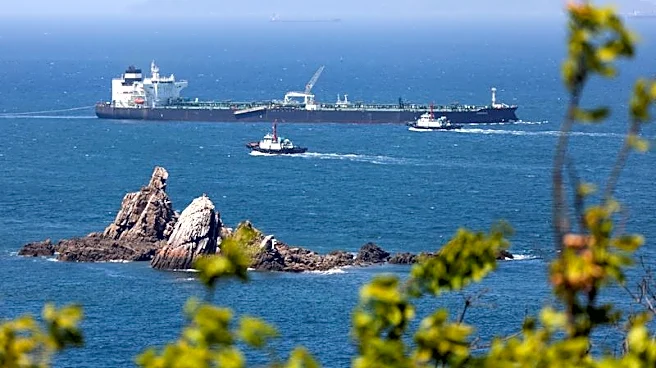
The United States has intensified its naval blockade of Iranian shipping routes through the Strait of Hormuz, a critical chokepoint for global oil flows. This blockade has significantly reduced vessel traffic and disrupted Iran's oil exports, leading
to a storage crisis. Iran's oil is piling up at production sites and export terminals, with storage capacity nearing its limits. Analysts estimate that Iran could run out of storage space within 12 to 22 days if the blockade continues. The US aims to cut Iran's oil revenues, which it claims fund regional military activities. In response, Iran has imposed restrictions on foreign shipping in the Strait, describing US actions as economic coercion.
Why It's Important?
The blockade of the Strait of Hormuz, which carries nearly 20% of global oil flows, has significant implications for global energy markets. The disruption has already led to increased volatility and potential supply shortages, affecting oil prices worldwide. The US strategy aims to weaken Iran's financial base by cutting its oil income, but this also risks escalating tensions in the region. The situation could lead to further instability in global oil supply chains, impacting economies dependent on Middle Eastern oil. The blockade's continuation could force Iran to cut oil production, affecting its economy and potentially leading to broader geopolitical consequences.
What's Next?
If the blockade persists, Iran may be forced to make critical decisions regarding its oil production and storage. The US is likely to continue its pressure campaign, potentially leading to further diplomatic and military tensions. Iran's response could involve increased control over the Strait and further restrictions on shipping. The international community may need to intervene to prevent a full-blown crisis, as the blockade's impact on global oil markets could have far-reaching economic consequences. Monitoring the situation closely will be crucial for stakeholders in the energy sector and international relations.