








What's Happening?
During FreightWeekSTL 2026, industry and government leaders emphasized the importance of collaboration in maintaining the U.S. inland waterway system amid challenges like weather extremes and aging infrastructure. Representatives from American Commercial
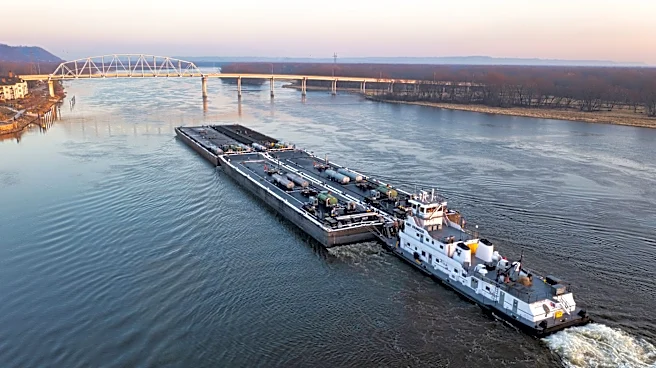
Barge Line (ACBL) and the U.S. Army Corps of Engineers discussed how coordinated planning and infrastructure investments are essential for keeping commerce moving on the Mississippi River. ACBL, with a fleet of 3,200 barges, relies heavily on the St. Louis region, a critical hub in the inland transportation network. The Corps of Engineers is tasked with maintaining navigation on 300 miles of the Mississippi River, requiring constant vigilance and engineering solutions. However, both parties stressed that engineering alone is insufficient, highlighting the need for close coordination to respond to changing river conditions and minimize disruptions.
Why It's Important?
The collaboration between public and private sectors is vital for sustaining the reliability and competitiveness of the U.S. inland waterways, which are crucial for freight transportation. As river conditions become more unpredictable due to climate change and increased freight demand, maintaining these waterways is essential for economic stability and growth. The partnership allows for faster responses to challenges, ensuring that the transportation of goods remains efficient and cost-effective. This collaboration also supports infrastructure investments, such as the construction of new locks, which can reduce congestion and improve the overall efficiency of the supply chain.
Beyond the Headlines
The discussion at FreightWeekSTL 2026 highlights a broader trend in the maritime sector, where strong partnerships between industry and government are becoming increasingly important. As the U.S. faces more frequent and severe weather events, the ability to adapt and respond quickly is crucial. This collaborative model not only addresses immediate challenges but also sets the stage for long-term improvements in the nation's transportation infrastructure. By investing in infrastructure and fostering partnerships, the U.S. can enhance its resilience against future disruptions and maintain its competitive edge in global trade.