
What's Happening?
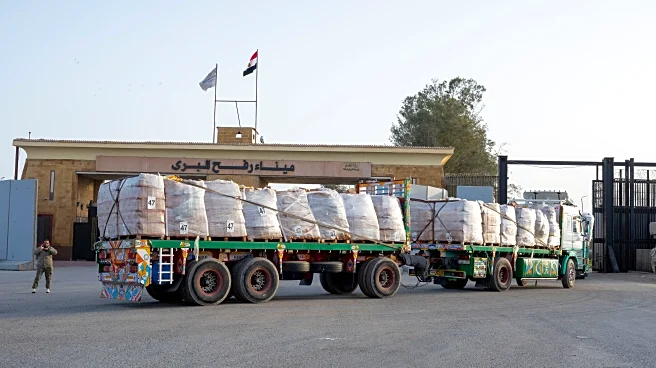
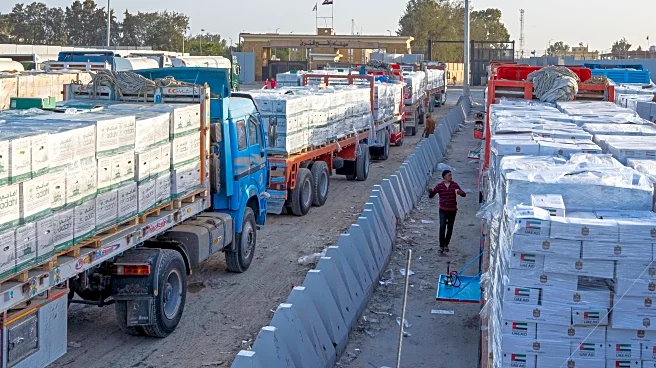
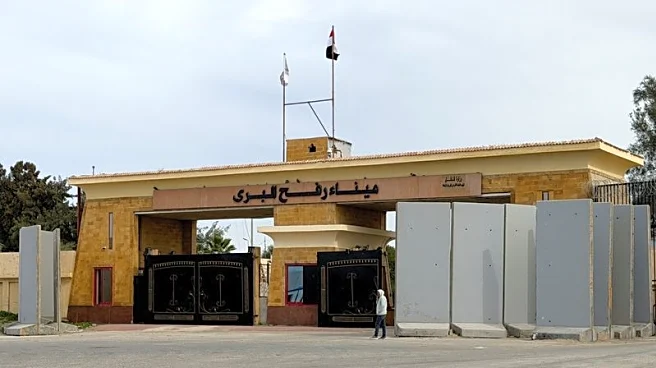
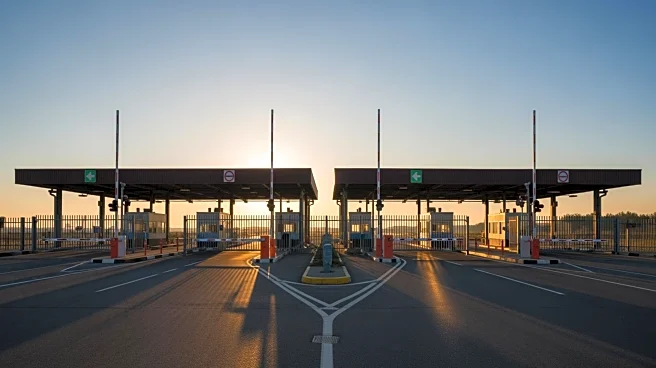
The Rafah border crossing between Gaza and Egypt has reopened, marking a significant step in the Israel-Hamas ceasefire process. Israel announced that limited travel to and from Gaza would resume, with
the crossing being prepared for fuller operation. The reopening follows a ceasefire agreement that halted over two years of conflict. Initially, only a limited number of people, including medical patients, will be allowed to cross, with the process supervised by European Union border patrol agents. The crossing had been largely closed since May 2024, when Israeli troops seized it to combat arms smuggling by Hamas.
Why It's Important?
The reopening of the Rafah crossing is a critical development in the ongoing peace process between Israel and Hamas. It represents a move towards easing the humanitarian situation in Gaza, allowing for medical evacuations and the return of displaced Palestinians. The crossing's operation is a key component of the ceasefire's second phase, which includes governance changes in Gaza and the disarmament of Hamas. Successful implementation could lead to increased stability in the region and improve living conditions for Gazans, while also testing the durability of the ceasefire agreement.
What's Next?
As the crossing begins operations, the number of travelers is expected to increase if the system proves successful. The ceasefire's second phase involves complex steps, including the establishment of a new Palestinian administrative committee and the deployment of an international security force. These developments will require careful coordination among Israel, Egypt, and international stakeholders. The situation remains delicate, with potential challenges in maintaining the ceasefire and ensuring the crossing's security and functionality.