







What's Happening?
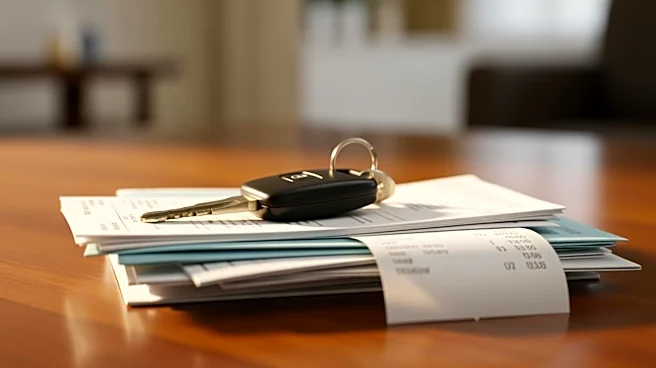
A recent study by Lending Tree highlights the increasing financial burden of car ownership in the United States. Many Americans are spending a significant portion of their income on car-related expenses, with some states experiencing higher financial strain.
The study reveals that nearly 39% of Americans view car ownership as a luxury they cannot afford. Rising fixed costs, particularly in loan payments and insurance, are cited as the main reasons for the increased expense. Insurance costs have surged by 37.5% since 2021, outpacing income growth. In states like Louisiana, auto loan holders spend up to 23.2% of their income on car costs, while Massachusetts residents spend the least at 10.6%. Despite these challenges, 61% of survey respondents still own or lease a car.
Why It's Important?
The rising costs of car ownership have significant implications for American households, particularly those with lower incomes. As transportation expenses consume a larger share of household budgets, families may have less disposable income for other necessities, potentially impacting their quality of life. The financial strain could also lead to increased debt levels as individuals take on longer auto loans to manage monthly payments. This trend highlights the broader issue of affordability in the U.S. economy, where income growth is not keeping pace with rising living costs. Policymakers and financial institutions may need to address these challenges to prevent further economic disparities.
What's Next?
If the trend of rising car ownership costs continues, it could lead to a shift in consumer behavior, with more individuals opting for alternative modes of transportation or delaying car purchases. Financial institutions may need to offer more flexible loan options to accommodate consumers' needs. Additionally, there could be increased pressure on policymakers to implement measures that address the affordability of transportation, such as subsidies or incentives for public transit use.