





What's Happening?
Interpol conducted a two-month operation, 'Operation Madre Tierra VIII,' from June 1 to July 31, across nine Latin American countries: Colombia, Costa Rica, the Dominican Republic, El Salvador, Guatemala, Honduras, Mexico, Nicaragua, and Panama. This
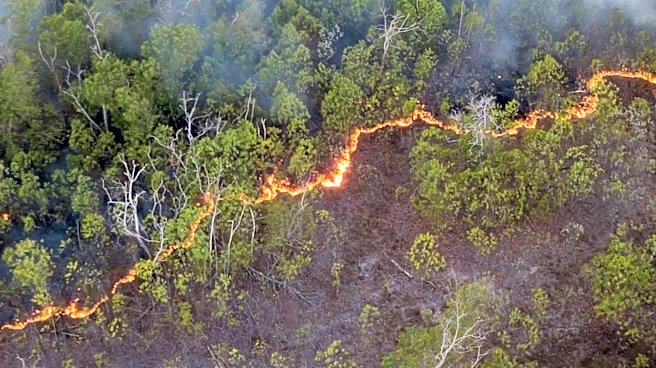
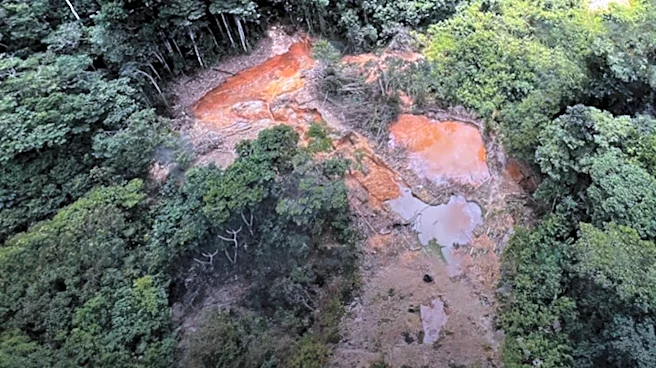
probe resulted in 233 arrests and identified 161 companies across several continents linked to Amazon destruction. Authorities documented over 330 cases and identified 312 suspected individuals involved in environmental crimes, with approximately 60,000 hectares of illegally cleared forest recorded. In Colombia, 16 people were arrested, and digital evidence was seized in connection with the destruction of over 52,000 hectares of protected forest, initially linked to 11 foreign companies. The investigation further connected an additional 161 companies and 65 individuals to this case. The operation also uncovered suspected permit fraud and the alleged use of shell firms and foreign investment structures to facilitate these illicit activities. This initiative builds upon a previous Interpol operation that led to 225 arrests and exposed more than 400 environmental crimes.
Why It's Important?
This Interpol operation highlights the transnational nature and increasing sophistication of environmental crime, particularly in the Amazon region. The involvement of 161 companies and the use of complex financial structures like shell firms and foreign investments underscore how organized crime is exploiting global supply chains and financial systems to profit from illegal deforestation. The destruction of vast tracts of protected forest, as seen in Colombia, has severe ecological consequences, contributing to climate change, loss of biodiversity, and disruption of vital ecosystems. The targeting of biodiversity-rich countries for high-value commodities destined for illicit markets demonstrates a significant threat to global environmental security. Furthermore, the overlap of environmental offenses with other organized criminal activities, such as illegal mining and wildlife trafficking, indicates a broader challenge to regional stability and law enforcement efforts. The financial trail, from illegal gold mines to buyers in North America, Europe, or Asia, reveals the global demand driving these destructive practices and the need for international cooperation to dismantle these networks.
What's Next?
The ongoing efforts will likely focus on tracking the financial trails of these environmental crimes to dismantle the commercial networks behind them, moving beyond individuals directly involved in physical extraction. Interpol's Regional Bureau for Central America chief, Krandall Gullock, emphasized the importance of 'following the money' to advance cases beyond those physically harvesting resources. Authorities are expected to continue pairing field enforcement with financial investigations, as seen in Peru, where disrupting money networks has proven more effective than solely focusing on equipment seizures. Further regional coordination, similar to the cross-border operation involving Brazil, French Guiana, Guyana, and Suriname, is anticipated to enhance the effectiveness of these crackdowns. Interpol will likely issue more international notices to gather information or take action against suspects tied to these networks. The intelligence gathered from 'Operation Madre Tierra VIII' will inform future strategies to combat illegal logging, wildlife trafficking, mining, and pollution, with an emphasis on the transnational nature of these crimes.
Beyond the Headlines
The deeper implications of this Interpol probe extend to the ethical responsibilities of corporations and investors, particularly those operating in or sourcing from regions prone to environmental exploitation. The alleged use of shell firms and foreign investment structures raises questions about corporate due diligence and transparency in global supply chains. Consumers in North America, Europe, and Asia are indirectly implicated, as their demand for commodities can fuel illicit markets. The environmental damage, including poisoned waterways and weakened ecosystems, disproportionately affects local communities, impacting their food security, health, and long-term stability. This situation highlights the urgent need for stronger international legal frameworks and enforcement mechanisms to hold corporations and individuals accountable for environmental crimes. It also underscores the critical role of financial intelligence in combating these offenses, as money laundering and illicit financial flows are integral to sustaining these criminal enterprises. The long-term shift required involves a global re-evaluation of commodity sourcing, investment practices, and consumer awareness to mitigate the devastating impact on the Amazon and other biodiversity hotspots.