


What's Happening?
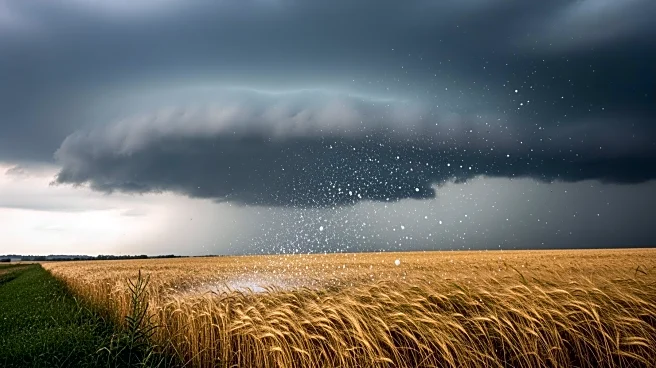
Rainfall is expected to extend to the western parts of the summer rainfall region in the coming weeks, potentially bringing hail conditions to these areas. According to independent agricultural meteorologist Johan van den Berg, the hail conditions may
also extend to parts of the winter rainfall region. A series of cold fronts is expected to bring cold air over the country, which could create favorable conditions for hail, strong winds, and tornadoes when they collide with tropical moist air from the north. While heavy rainfall may still occur in some places, forecasts indicate that the overall rainfall conditions are starting to weaken, with less rain expected than previously predicted, especially over the central and western interior. This weather pattern could significantly affect grape farmers in the Northern Cape, who are currently harvesting and require dry conditions.
Why It's Important?
The extension of hail conditions into new regions poses a significant threat to agricultural activities, particularly for grape farmers in the Northern Cape who are in the midst of their harvest. The potential for heavy rainfall and hail could damage crops, leading to economic losses for farmers who rely on these harvests. Conversely, the rainfall is beneficial for livestock farmers in the dry western and southern interior, as it provides much-needed water resources. The weather conditions also pose a risk of disease in crops, such as apple and pear orchards, due to wet and humid conditions, necessitating precautions by producers to mitigate disease pressure.
What's Next?
Farmers in the affected regions will need to monitor weather forecasts closely and take necessary precautions to protect their crops and livestock. Grape farmers, in particular, may need to expedite their harvests or implement protective measures to minimize damage from potential hail and heavy rainfall. Additionally, producers in areas prone to disease due to wet conditions should remain vigilant and apply appropriate treatments to safeguard their crops. The agricultural community will likely seek guidance from meteorologists and agricultural experts to navigate these challenging weather conditions.