
What's Happening?
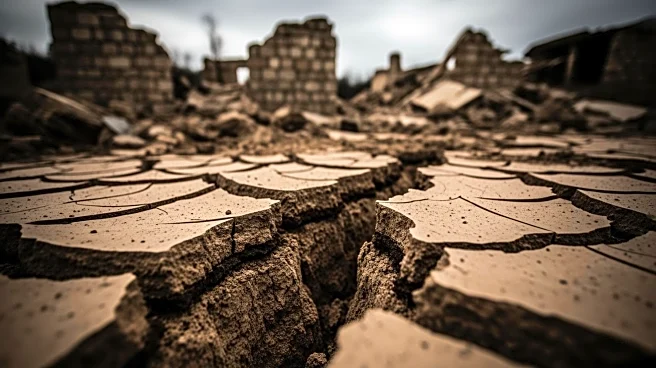
The town of Niscemi in Sicily has been severely impacted by a massive landslide triggered by Cyclone Harry. On January 25, torrential rains caused a 4km-long chasm to form, swallowing roads, cars, and parts
of the town's infrastructure. Over 1,600 residents have been evacuated, with many homes and historic buildings, including 17th-century churches, at risk of collapse. The landslide has left the town's residents in a state of despair, as they face the loss of their homes and livelihoods. The situation is exacerbated by decades of poor urban planning and construction in areas prone to landslides and other natural disasters.
Why It's Important?
This event highlights the ongoing challenges posed by climate change and inadequate urban planning. The landslide in Niscemi is a stark reminder of the vulnerabilities faced by communities built in high-risk areas. The disaster underscores the need for improved building regulations and urban planning to prevent similar occurrences in the future. The economic impact is significant, with damages estimated at €2 billion, affecting both public and private infrastructure. The situation also raises questions about the responsibility of authorities in allowing construction in such vulnerable areas, potentially leading to legal and policy reforms.
What's Next?
Authorities are currently investigating the causes of the landslide, with a focus on negligent disaster management. The public prosecutor's office in Gela has opened an investigation, examining materials and images to determine accountability. In the short term, efforts are focused on providing shelter and support to displaced residents. Long-term solutions may involve reevaluating building codes and urban planning policies to mitigate future risks. The situation in Niscemi could serve as a catalyst for broader discussions on climate adaptation and disaster preparedness in Italy and beyond.
Beyond the Headlines
The landslide in Niscemi is not an isolated incident but part of a broader pattern of environmental challenges facing Italy. The country's history of rapid urbanization, often ignoring environmental risks, has left many communities vulnerable to natural disasters. This event may prompt a reevaluation of Italy's approach to urban development, emphasizing sustainability and resilience. Additionally, the cultural loss is significant, with historic buildings and rare book collections at risk, highlighting the need to balance development with the preservation of cultural heritage.