







What's Happening?
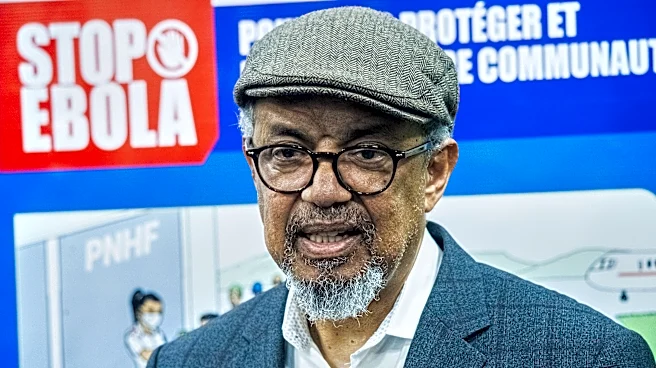
The Africa Centres for Disease Control and Prevention (Africa CDC) has reported a significant reduction in international funding commitments for the Ebola outbreak response in the Democratic Republic of Congo (DRC) and Uganda. Initially, nearly $500 million
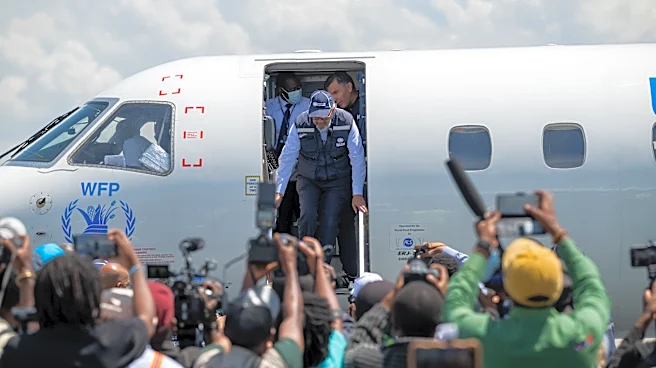
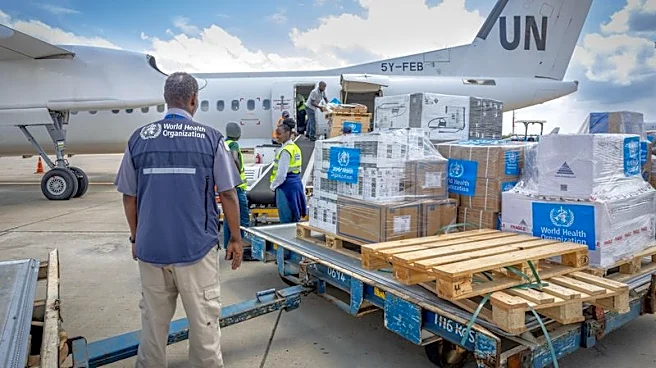
was pledged, but this has now decreased to approximately $290 million. The outbreak involves the Bundibugyo strain of Ebola, which currently lacks an approved vaccine or treatment, making rapid detection and community engagement crucial. The World Health Organization (WHO) has declared the outbreak a Public Health Emergency of International Concern. The funding shortfall is causing concern among African health officials, who are already dealing with logistical challenges and public mistrust in affected communities.
Why It's Important?
The funding crisis could severely impact the ability to contain the Ebola outbreak, which poses a significant threat due to the region's extensive cross-border trade and migration activities. If containment efforts fail, there is a risk of wider transmission, which could have economic repercussions, including disruptions to trade, tourism, and investment. The outbreak's potential to strain already pressured African economies, which are facing slower growth and elevated debt burdens, underscores the urgency of securing adequate funding. The situation highlights a broader debate over global health funding priorities, as emergency responses struggle to secure financing amidst multiple global crises.
What's Next?
Health officials are focused on stopping the outbreak before it evolves into a wider regional crisis. Despite the funding challenges, the Africa CDC has praised the World Bank and the African Development Bank for redirecting resources towards the outbreak response. The United States has imposed temporary entry restrictions on travelers from Congo, Uganda, and South Sudan, while other countries are enhancing screening measures. The international community is closely monitoring the situation, and further funding commitments may be necessary to ensure a comprehensive response.