








What's Happening?
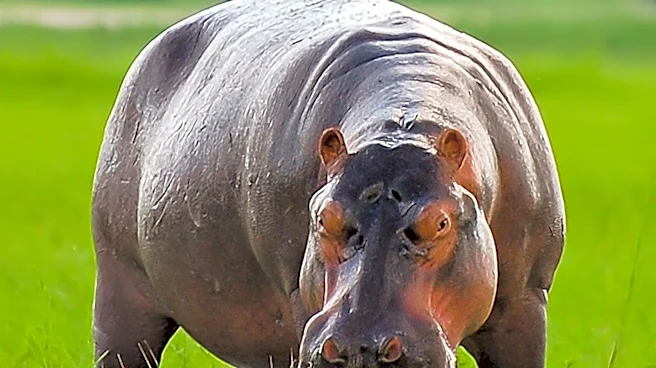
In northwestern Colombia, authorities have rescued a newborn hippopotamus, known as a 'cocaine hippo,' linked to the infamous drug lord Pablo Escobar. The hippo was found alone by fishermen on a riverbank, showing signs of malnutrition. After receiving
veterinary care, the animal was transferred to a sanctuary at Hacienda Napoles, Escobar's former estate. Colombia is home to approximately 200 of these hippos, descendants of those imported by Escobar in the 1980s. These animals have become an invasive species, disrupting local ecosystems and posing threats to native wildlife.
Why It's Important?
The rescue of the newborn hippo underscores the ongoing challenges Colombia faces in managing the ecological impact of Escobar's legacy. The hippos, lacking natural predators, have proliferated, causing significant environmental disruption. This situation highlights the broader issue of invasive species and their impact on biodiversity. The Colombian government's efforts to manage the hippo population, including potential culling and relocation, reflect the complexities of balancing ecological preservation with animal welfare. The story also draws attention to the long-lasting effects of human actions on the environment.