






What's Happening?
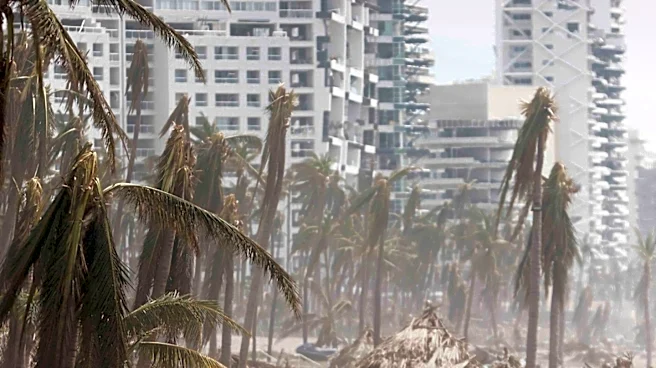
Governments across Latin America and the Caribbean are facing increasing pressure from natural catastrophes, which significantly impact public finances, infrastructure, and communities. These challenges are interconnected with public debt, low tax collection,
and economic growth. To address this, countries in the region are actively exploring and implementing innovative risk transfer mechanisms, including both traditional and parametric insurance solutions. Mexico, for instance, has been a pioneer with its Natural Disaster Fund (FONDEN), established in the late 1990s, which has evolved to incorporate insurance and capital-market solutions. The goal is to enhance financial resilience and support faster recovery efforts after major events. Parametric insurance, in particular, offers quicker access to funds based on predefined parameters, bypassing lengthy physical loss assessments, which is crucial when immediate liquidity is needed for disaster response.
Why It's Important?
The adoption of advanced catastrophe risk financing strategies by Latin American and Caribbean governments holds significant importance for the U.S. and global insurance and reinsurance markets. As these regions strengthen their financial resilience against natural disasters, it can lead to more stable economies, reducing the potential for humanitarian crises and economic instability that could indirectly affect U.S. interests through trade, migration, and aid. For U.S. and international insurers, this trend represents a growing market for specialized risk transfer products. The increased demand for both traditional and parametric solutions indicates a sophisticated approach to risk management, potentially fostering innovation in the insurance sector. Furthermore, more efficient disaster response and recovery in these neighboring regions can mitigate broader geopolitical and economic ripple effects that might otherwise necessitate U.S. intervention or assistance.
What's Next?
Governments in Latin America and the Caribbean are expected to continue refining their catastrophe risk financing strategies, potentially leading to broader adoption of parametric insurance and other innovative financial instruments. This ongoing evolution will likely involve increased collaboration with international insurance and reinsurance markets to tailor solutions that meet specific regional needs. The success of pioneering efforts, such as Mexico's FONDEN, will serve as models for other nations, encouraging further investment in risk transfer mechanisms. Future developments may also include the integration of climate change adaptation measures into these financial frameworks, as the frequency and intensity of natural disasters are projected to increase. This will necessitate continuous innovation in risk modeling and product development from the insurance industry.
Beyond the Headlines
The shift towards more sophisticated catastrophe risk financing in Latin America and the Caribbean highlights a deeper global trend: the recognition that traditional disaster response is often insufficient in the face of escalating climate-related risks. This development underscores a move from reactive aid to proactive financial planning, emphasizing resilience and sustainability. Ethically, it raises questions about equitable access to these advanced financial tools, ensuring that smaller or less developed nations can also benefit. Legally, it may prompt the development of new regulatory frameworks to govern parametric insurance and other innovative products. Culturally, it signifies a growing awareness and acceptance of financial instruments as critical components of disaster preparedness, moving beyond conventional emergency management to a more integrated approach that leverages market solutions for societal protection.