



What's Happening?
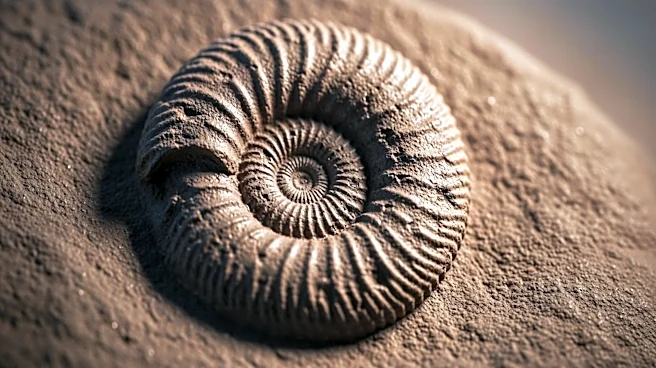
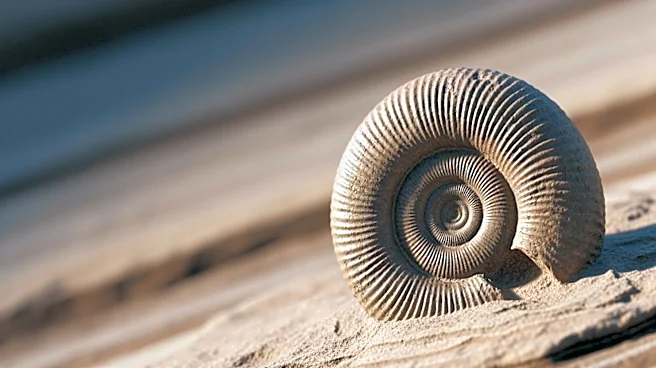
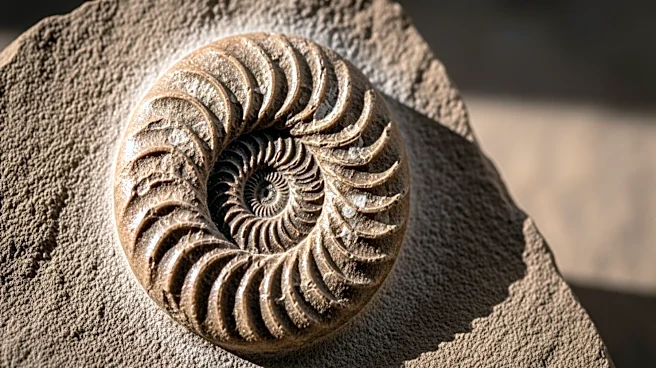
A prehistoric fossil, previously thought to be the world's oldest octopus, has been reclassified as a relative of the nautilus, a cephalopod with tentacles and a shell. The fossil, known as Pohlsepia mazonensis, was discovered in the Mazon Creek area
of Illinois, a region rich in fossils from a period predating dinosaurs. Initially identified as an octopus in 2000, the fossil challenged existing theories about octopus evolution. However, recent research led by Thomas Clements from the University of Reading revealed that the fossil's teeth structure aligns more closely with nautiloids, not octopuses.
Why It's Important?
This reclassification has significant implications for the scientific understanding of cephalopod evolution. It highlights the importance of revisiting past discoveries with modern technology, which can lead to new insights and corrections in scientific records. The finding also impacts the Guinness World Records, which will no longer list Pohlsepia mazonensis as the earliest known octopus. This discovery underscores the dynamic nature of paleontological research and the potential for ongoing debates and revisions in the field.
What's Next?
Following this discovery, scientists may continue to reexamine other fossils using advanced techniques to ensure accurate classifications. The Field Museum in Chicago, which houses the fossil, may update its exhibits and educational materials to reflect the new findings. Researchers might also explore further studies on nautiloids and their evolutionary history, potentially leading to new discoveries about ancient marine life.