




What's Happening?
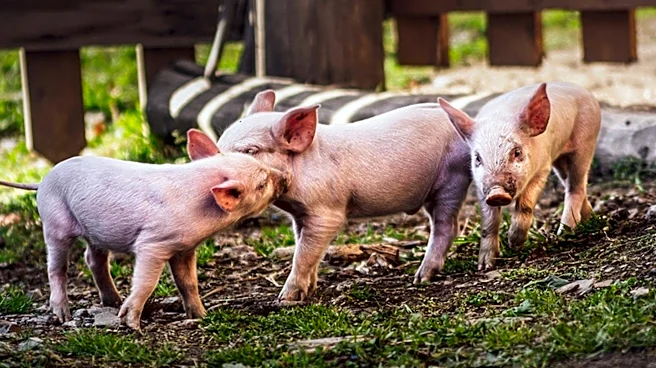
South Dakota State University (SDSU) has completed a $1.8 million expansion of its Swine Education and Research Facility. This upgrade increases the facility's wean-to-finish capacity by 50%, allowing for more animals to be raised to market weight in a single
location. The expansion aims to create additional opportunities for research, student training, and industry outreach within the pork sector. Since its establishment in 2016, the facility has served as a vital resource, offering practical learning experiences for students and supporting research projects that address challenges faced by livestock producers. The latest additions will enable larger and more diverse research projects focused on animal production and management, particularly increasing the number of nursery and finishing trials. Agricultural leaders and university officials recently marked the project's completion with a ribbon-cutting event, highlighting the collaborative efforts between SDSU and various agricultural organizations that provided financial support.
Why It's Important?
This expansion is a significant investment in the future of the U.S. pork industry, particularly in South Dakota. By increasing research capacity, SDSU can generate valuable information for producers, leading to improved efficiency and stronger decision-making on farms. The ability to conduct more nursery and finishing trials will allow scientists to study production methods, evaluate new technologies, and address practical questions directly from the livestock industry. This directly benefits producers by providing data-driven insights to enhance their operations and profitability. Furthermore, the project exemplifies successful cross-commodity cooperation, with funding from corn, pork, soybean, and livestock groups. This collaborative model strengthens the agricultural sector as a whole, fostering innovation and ensuring that research remains responsive to industry needs. The facility also plays a crucial role in training the next generation of agricultural leaders, providing students with hands-on experience and contributing to a skilled workforce for the industry.
What's Next?
The upgraded SDSU Swine Education and Research Facility is scheduled to be fully operational by mid-October, at which point its total capacity will increase to approximately 1,800 head. This enhanced capacity will provide greater flexibility for future research initiatives and educational programs. Researchers anticipate conducting a higher volume of nursery and finishing trials, which will yield more comprehensive data for producers. The university also plans to continue fostering producer engagement through industry events, educational presentations, and research-focused programs. These activities are designed to facilitate knowledge sharing and strengthen the connection between researchers and agricultural professionals. The ongoing collaboration between SDSU, commodity groups, and industry partners is expected to drive continued innovation and growth within the pork industry and the broader agricultural economy.
Beyond the Headlines
The expansion of the SDSU Swine Education and Research Facility underscores a broader trend in U.S. agriculture: the increasing reliance on scientific research and collaborative partnerships to address evolving industry challenges. As livestock production faces complex issues such as sustainability, animal welfare, and market fluctuations, investments in research infrastructure become critical. This project highlights the ethical dimension of agricultural research, aiming to improve production practices while potentially addressing concerns related to efficiency and resource utilization. The long-term shift towards data-driven decision-making and technological integration in farming is evident here, with the facility serving as a hub for developing and testing new methods. The continued involvement of various agricultural organizations in funding such initiatives demonstrates a collective commitment to the industry's future, recognizing that shared investment in research and education is essential for sustained growth and competitiveness in the global market.