






What's Happening?
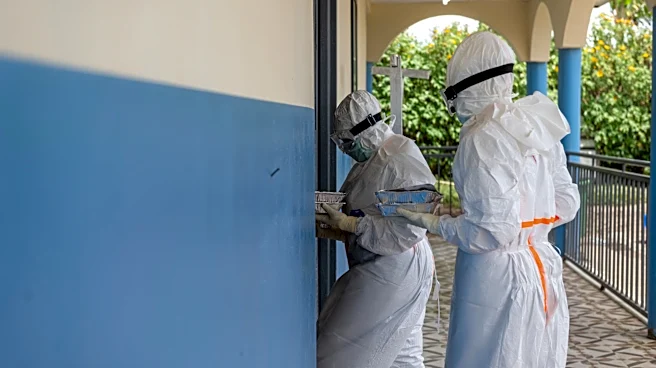
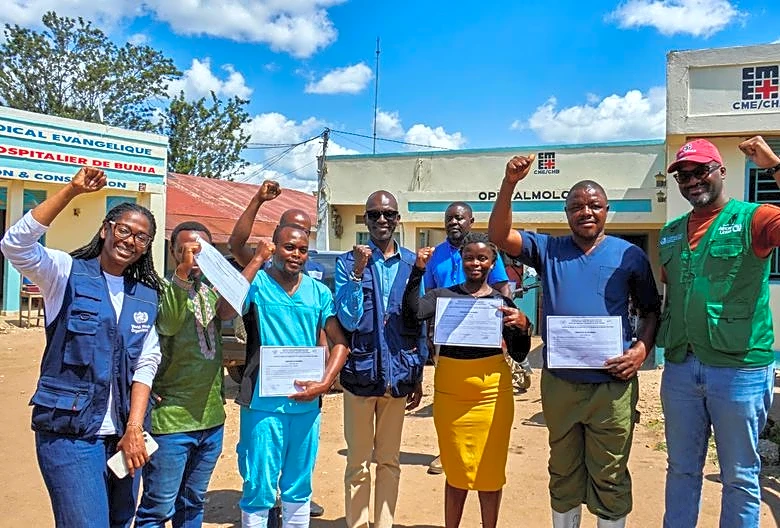
The United States has pledged more than $212 million to support Ebola outbreak response efforts in the Democratic Republic of Congo (DRC) and Uganda. This funding, coordinated with the U.S. Centers for Disease Control and Prevention (CDC), aims to contain
the virus and prevent its international spread. The commitment includes over $162 million in direct assistance and $50 million for establishing up to 50 Ebola response clinics. Additionally, the U.S. has provided $350 million through United Nations Office for the Coordination of Humanitarian Affairs (OCHA) funds for broader humanitarian relief in the region. This initiative is part of a larger $1.8 billion humanitarian package announced in May. The U.S. is also working with African governments to enhance preparedness measures beyond the outbreak zones, including a $13.5 million commitment to Kenya's Ebola preparedness.
Why It's Important?
This significant financial commitment underscores the U.S.'s role as a leading global health donor, particularly in combating infectious diseases like Ebola. The funding is crucial for expanding containment efforts and protecting global public health, especially with the upcoming FIFA World Cup 2026, which raises concerns about cross-border virus transmission. The U.S.'s involvement not only aids in immediate outbreak response but also strengthens long-term health infrastructure in affected regions. This move could enhance international cooperation and trust in U.S.-led health initiatives, potentially influencing future global health policies and funding strategies.
What's Next?
The U.S. will continue to collaborate with African governments and international agencies to implement the funded initiatives. This includes setting up Ebola response clinics and enhancing health screening measures for travelers from high-risk regions. The U.S. State Department has updated its travel advisories, requiring travelers from the DRC, Uganda, or South Sudan to undergo enhanced health screenings at designated U.S. airports. These measures aim to prevent the virus's spread and ensure public safety during international events like the World Cup. Ongoing monitoring and evaluation of the funded projects will be essential to ensure their effectiveness and sustainability.