





What's Happening?
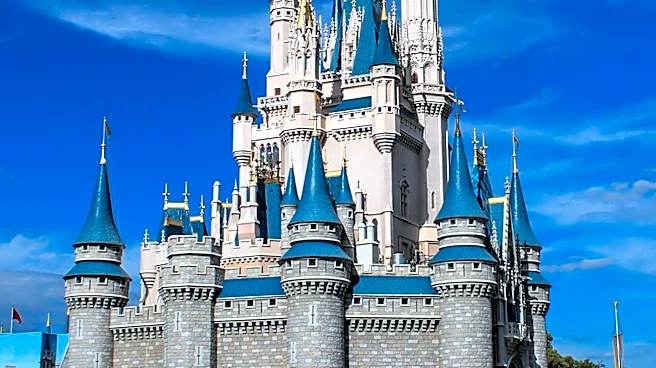
The Federal Aviation Administration (FAA) has reissued the no-fly zones over Walt Disney World and Disneyland, replacing notices that had been in effect since 2014. The reissued notices, FDC NOTAM 6/6924 for Disney World and FDC NOTAM 6/6925 for Disneyland, became
effective on November 10. While the airspace restrictions themselves remain unchanged—covering a 3-nautical-mile radius from the surface up to 3,000 feet above ground level and being permanent—the language within the notices has been updated. Notably, the new wording omits the explicit mention of 'unmanned and remote controlled aircraft,' which was present in the 2014 notices. Despite this change, drones are still considered aircraft under FAA rules, implying they remain subject to the restrictions. The reissuance occurred after the previous Disney entries temporarily disappeared from the FAA's public flight restriction list, prompting questions about their status.
Why It's Important?
The reissuance of these no-fly zones is significant for several reasons. Firstly, it reaffirms the permanent nature of these restrictions over two of the nation's most popular theme parks, ensuring continued security and operational control of the airspace. This impacts various stakeholders, including private pilots, commercial drone operators, and even individuals attempting to fly recreational drones near the parks. The updated language, particularly the removal of explicit drone mentions, could lead to confusion if not clearly communicated by the FAA, potentially affecting drone pilots who might misinterpret the change as a relaxation of rules. Furthermore, the consistent application of these restrictions, despite past congressional efforts by figures like Rep. Troy Nehls to challenge them, underscores the FAA's commitment to maintaining these designated 'national defense airspace' areas. The continuity of these zones is crucial for the safety and guest experience within the parks, preventing disruptions from unauthorized aerial activities.
What's Next?
Waivers issued under the old notices will remain valid until their listed end dates, but no longer than 90 days after the new notices took effect, placing the outer limit around February 8, 2027. The FAA has not yet provided a detailed explanation for why the old entries vanished from the public list before the replacements were posted, nor has it clarified if the omission of specific drone language is intended to alter regulations for drone pilots. However, given that drones are still classified as aircraft, it is generally understood that they remain covered by the restrictions. Future developments may include further clarification from the FAA regarding the updated language and its implications for drone operations. The continued enforcement of these no-fly zones will likely prevent any unauthorized aerial activities over the Disney parks, maintaining the status quo for visitors and park operations.
Beyond the Headlines
The FAA's decision to update the language of the Disney no-fly zones, while maintaining the core restrictions, highlights a broader trend in regulatory bodies adapting to evolving technology, particularly the proliferation of drones. The initial explicit mention of 'unmanned and remote controlled aircraft' in 2014 reflected a nascent understanding of drone technology and its potential impact on airspace. The subsequent removal of this explicit mention, while still implicitly covering drones under the general definition of 'aircraft,' suggests a maturation in regulatory approach. This shift could indicate a move towards more generalized and adaptable regulations that can encompass future technological advancements without requiring constant re-specification. It also underscores the ongoing challenge for regulators to balance security concerns with the rapid pace of technological innovation, particularly in areas with high public density and critical infrastructure. The incident also subtly touches upon the ongoing debate regarding federal versus local control over airspace, especially concerning private entities like Disney.