







What's Happening?
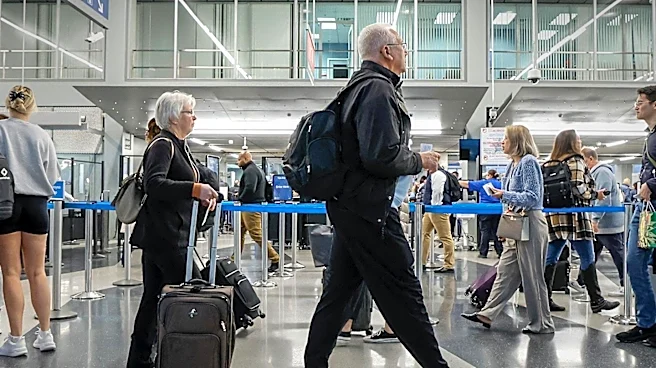
The European Union's new Entry/Exit System (EES) has come under scrutiny due to significant delays at airports across Europe. The EES, implemented in April, requires travelers entering the Schengen area to register their fingerprints, photos, and passport
details at self-service kiosks. This system aims to enhance security by tracking entries and exits, but has led to long queues and extended wait times. EU Commissioner Magnus Brunner has defended the system, emphasizing its long-term security benefits and noting that nearly 110 million entries and exits have been registered, with 44,000 refusals of entry, including 1,100 identified as security risks. Despite acknowledging short-term challenges, Brunner insists that member states had ample time to prepare for the EES and suggests that other factors, such as staffing shortages and inadequate infrastructure, may be contributing to the delays.
Why It's Important?
The implementation of the EES is significant as it represents a major shift in how border security is managed within the Schengen area, impacting millions of travelers. The delays have caused operational disruptions for airlines and airports, leading to calls for the EU to provide more flexibility in the system's application. The situation highlights the challenges of balancing security enhancements with efficient travel processes. The criticism from major aviation groups underscores the pressure on the EU to address these issues promptly to avoid further disruptions, especially during peak travel periods. The outcome of this situation could influence future policy decisions regarding border security and travel regulations within the EU.
What's Next?
The EU is expected to continue discussions with aviation stakeholders to address the ongoing issues with the EES. A meeting is scheduled for July 7, where further measures to alleviate the delays may be considered. The EU may explore temporary suspensions of biometric registrations during peak travel times to reduce wait times. Additionally, the deployment of Frontex personnel to assist member states struggling with the new system is underway. The outcome of these discussions could lead to adjustments in the EES implementation to better accommodate the operational capacities of airports and border control facilities.