




What's Happening?
Human Rights Watch (HRW) is calling on French President Emmanuel Macron to use the upcoming Francophonie Summit in Phnom Penh, Cambodia, to confront escalating transnational repression in Southeast Asia. HRW highlights a pattern of abuses targeting political
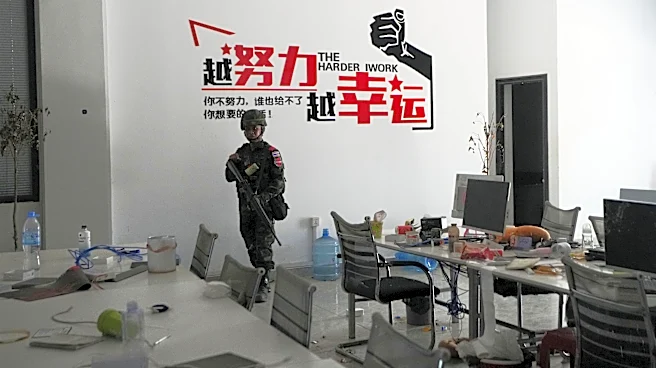
activists and dissidents across international borders, specifically in Cambodia, Vietnam, Laos, and Thailand. The organization cites several cases, including the disappearance of three alleged Viet Tan members in Cambodia who later reappeared in Vietnamese custody, the killing of a Cambodian opposition lawmaker in Bangkok, and the intimidation and violence against Cambodian dissidents in Thailand. HRW also points to the disappearance of a Lao activist and asylum seeker in Thailand and the summary deportation of Cambodian activists by Thai authorities despite their recognized refugee status. The report criticizes the selective enforcement by governments, which pursue critics across borders but are reluctant to prosecute well-connected figures involved in cyber-scam compounds and human trafficking.
Why It's Important?
This issue is critically important as it exposes a severe erosion of human rights and international protection norms in Southeast Asia, with potential implications for global diplomacy and human rights advocacy. For the U.S., which often champions human rights and democratic values, these developments underscore the challenges of promoting these principles in regions where transnational repression is prevalent. The alleged complicity of governments in targeting dissidents and shielding criminal networks undermines the rule of law and creates an environment of fear for activists and asylum seekers. This situation could impact U.S. foreign policy decisions, trade relations, and humanitarian aid to the affected countries. It also highlights the need for stronger international mechanisms to protect refugees and dissidents and to hold states accountable for cross-border abuses. The failure to address such repression can embolden authoritarian regimes and destabilize regional security.
What's Next?
Human Rights Watch urges President Macron to publicly and principledly intervene at the Francophonie Summit, pressing his counterparts to end cross-border deals that expose refugees and dissidents to detention, disappearance, or death. Specifically, HRW calls for Cambodia to investigate the disappearance of the alleged Viet Tan members and arrest suspects in the killing of Lim Kimya, while Vietnam should release the detained activists. The French government is also urged to pressure Thailand, Vietnam, Cambodia, and Laos to cease these abuses. If quiet diplomacy has proven ineffective, a public stance at the summit could signal a stronger international commitment to human rights. The outcome of this summit could influence future diplomatic engagements, potentially leading to increased international pressure, sanctions, or a re-evaluation of relationships with the implicated countries if the abuses continue. The situation also calls for enhanced support for human rights defenders and asylum seekers in the region.
Beyond the Headlines
The issue of transnational repression extends beyond individual cases, revealing a systemic challenge to the international human rights framework. It highlights how authoritarian states are increasingly using sophisticated methods, including cross-border abductions and judicial manipulation, to silence dissent beyond their borders. This trend poses a significant threat to the principle of asylum and the safety of refugees worldwide. The alleged involvement of government officials in enabling cyber-scam compounds, where trafficking victims are forced into labor, further complicates the human rights landscape, blurring the lines between state-sponsored repression and organized crime. This situation underscores the urgent need for international cooperation to combat these complex forms of abuse and to ensure that human rights are protected regardless of national borders. It also raises ethical questions about the responsibilities of international bodies and powerful nations to intervene when fundamental human rights are systematically violated.