
What's Happening?
Senator Adam Schiff, D-Calif., has introduced the Mail Accessibility and Inclusion for Low-Income Families (MAIL) Act, a federal proposal aimed at alleviating homelessness by offering free post office
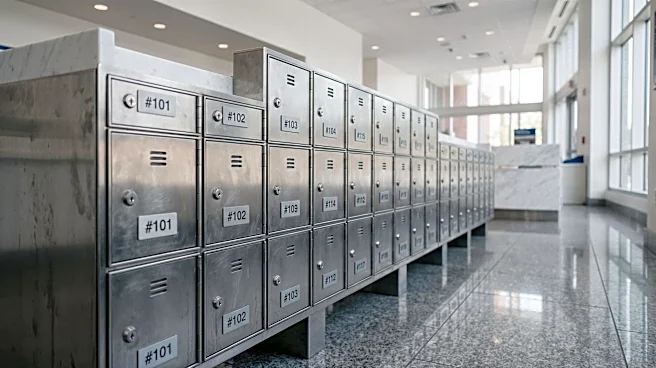
boxes to individuals experiencing homelessness or housing instability. This initiative is inspired by successful local programs, such as the one run by So Others Might Eat (SOME) in Washington, D.C., which has been providing mail services to approximately 3,000 homeless individuals since the COVID pandemic. Advocates for the MAIL Act emphasize that having a stable mailing address is crucial for individuals to access essential services, apply for jobs, receive government benefits like stimulus checks and tax returns, and obtain vital documents such as birth certificates and social security cards. The proposed legislation would require Congress to appropriate funds to cover the costs of purchasing and installing these P.O. boxes, as well as compensating the Postal Service for any lost revenue.
Why It's Important?
The MAIL Act addresses a fundamental barrier to self-sufficiency for individuals experiencing homelessness: the lack of a permanent address. This seemingly simple issue has far-reaching implications, as a mailing address is often a prerequisite for employment, housing applications, and accessing healthcare and financial services. By providing free post office boxes, the legislation aims to create a pathway for individuals to re-enter mainstream society and break the cycle of poverty. The success of programs like SOME demonstrates the tangible benefits, including enabling recipients to receive medication and even Amazon packages, highlighting the practical necessity of mail access in modern life. If enacted, the MAIL Act could significantly impact national efforts to combat homelessness, offering a standardized and accessible solution across the U.S. It also underscores the role of government in addressing social determinants of health and economic stability.
What's Next?
The MAIL Act, proposed by Senator Adam Schiff, is currently awaiting further action in Congress. The Postal Service has acknowledged awareness of the proposal but has not yet publicly stated its position on the legislation. For the bill to advance, it will need to gain bipartisan support and navigate the legislative process, including committee reviews and votes in both the Senate and the House of Representatives. If passed, the Post Master General would be tasked with submitting a cost estimate to Congress for the implementation of the program, including the purchase and installation of P.O. boxes and an assessment of lost revenue. The appropriation of these funds would then be a subsequent step. In the interim, local organizations like SOME will continue their efforts to provide mail services to their clients, serving as models for the potential federal program and demonstrating its effectiveness at a community level.
Beyond the Headlines
Beyond the immediate practical benefits, the MAIL Act touches upon deeper issues of dignity and social inclusion for the homeless population. A mailing address is not just a logistical tool; it is often a symbol of belonging and stability, which can significantly impact an individual's self-esteem and mental well-being. The act could help destigmatize homelessness by providing a recognized point of contact, fostering a sense of normalcy and connection to society. Furthermore, the initiative could highlight the broader systemic challenges contributing to homelessness and prompt further policy discussions on affordable housing, mental health services, and employment support. The success of such a program could also encourage other government agencies and private entities to re-evaluate their requirements for a physical address, potentially leading to more inclusive practices across various sectors.