







What's Happening?
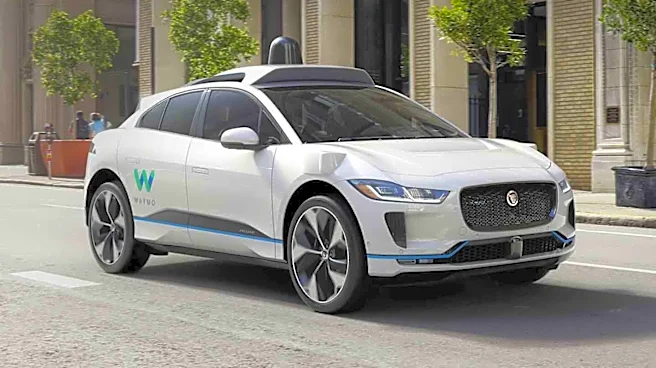
San Diego is experiencing significant issues with Waymo robotaxis occupying public fast-charging stations, leading to long wait times for electric vehicle (EV) drivers. Residents like José Manjarrés report finding charging stations, some with four spots,
entirely filled by Waymo vehicles, causing waits of up to an hour. This situation has prompted complaints from other San Diego residents and local politicians. Waymo officially launched its service in San Diego in September, but its vehicles were present for testing months prior. City leaders are now urging California state officials, including Governor Gavin Newsom, to grant local governments more authority over the deployment and monitoring of driverless cars. Councilmember Sean Elo-Rivera, who chairs a Metropolitan Transit System advisory committee, has voiced opposition to the expansion of driverless vehicles, citing concerns about their impact on public resources and the displacement of human drivers.
Why It's Important?
The influx of Waymo robotaxis monopolizing EV charging stations in San Diego highlights a growing tension between emerging autonomous vehicle technology and existing urban infrastructure. This issue directly impacts EV owners who rely on public charging, potentially discouraging EV adoption if charging access becomes unreliable. For the autonomous vehicle industry, this situation underscores the need for comprehensive infrastructure planning and collaboration with local authorities to ensure smooth integration into urban environments. The calls from San Diego city leaders for greater local control over driverless car operations could set a precedent for how other U.S. cities manage the rollout of autonomous technologies, potentially leading to a patchwork of regulations across different municipalities. This could create challenges for AV companies seeking to scale their services nationally, as they would need to navigate varying local rules regarding deployment, monitoring, and infrastructure use.
What's Next?
San Diego is actively working to expand its public EV charging network, with plans to add over 50 new charging sites within the next 18 months and retrofit existing public stations. While this expansion aims to provide more resources for residents and visitors, it is independent of Waymo's plans, and robotaxis will not be barred from using these public stations. Waymo has stated that as its operations mature in a city, it establishes its own dedicated charging infrastructure to minimize reliance on public stations. However, in the interim, the competition for public chargers is expected to continue. The San Diego City Council's unanimous vote to request more control from state lawmakers indicates a strong local desire for regulatory power over autonomous vehicles. This could lead to legislative efforts in California to redefine the authority of local governments regarding AV deployment and operations, potentially influencing policy discussions in other states facing similar challenges.
Beyond the Headlines
The conflict over EV charging stations in San Diego extends beyond mere infrastructure sharing; it touches upon broader societal questions regarding the integration of AI-enabled bots into daily life. The situation raises ethical and legal conundrums, such as who is responsible if a driverless car breaks the law, and how public spaces should be shared between humans and autonomous machines. The frustration expressed by EV drivers, who feel they are 'competing with robots,' points to a potential for public backlash against autonomous technologies if their deployment is perceived as disruptive or inequitable. This scenario in San Diego could serve as a case study for how cities nationwide will grapple with the 'robot wars'—the emerging challenges of coexisting with and regulating autonomous systems in various forms, from delivery bots to self-driving cars, and the need to establish new norms and policies for their operation.