



What's Happening?
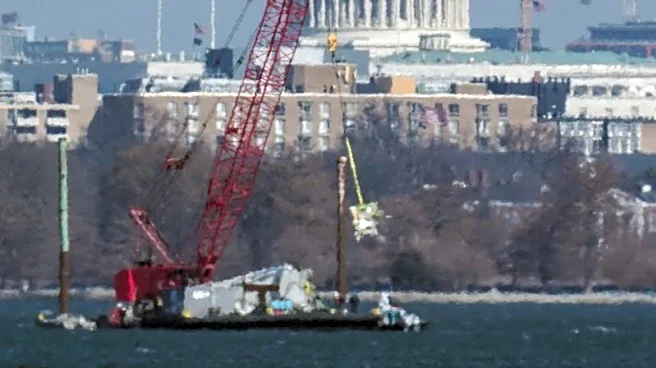
The U.S. government has acknowledged its partial responsibility in a fatal collision between an airliner and a Black Hawk helicopter near Washington, D.C., which resulted in the deaths of 67 people. The incident, which occurred last January, was the deadliest
plane crash on American soil in over two decades. The government's admission comes in response to a lawsuit filed by the victims' families, citing that an air traffic controller violated visual separation procedures and that the Army helicopter pilots failed to maintain proper vigilance. The lawsuit also implicates American Airlines and PSA Airlines, although these companies have sought dismissal of the claims. The National Transportation Safety Board (NTSB) is expected to release a detailed report on the crash early next year, having already identified several contributing factors, including the helicopter's altitude and the FAA's oversight failures.
Why It's Important?
This admission by the U.S. government highlights significant lapses in air traffic control and military aviation protocols, raising concerns about safety standards and accountability. The crash underscores the potential risks associated with air traffic management in busy airspaces like that of Washington, D.C. The acknowledgment of responsibility could lead to substantial financial liabilities for the government and prompt a reevaluation of current air traffic control practices. Additionally, the case may influence future regulatory changes aimed at preventing similar incidents, impacting airlines, military operations, and air traffic control systems nationwide.
What's Next?
The NTSB's forthcoming report will likely provide further insights into the causes of the crash and recommend safety improvements. Legal proceedings will continue as the government and implicated airlines address the lawsuit's claims. The FAA may face pressure to implement stricter air traffic control measures and enhance training for controllers and pilots. The outcome of this case could set precedents for how similar incidents are handled legally and operationally in the future.