






What's Happening?
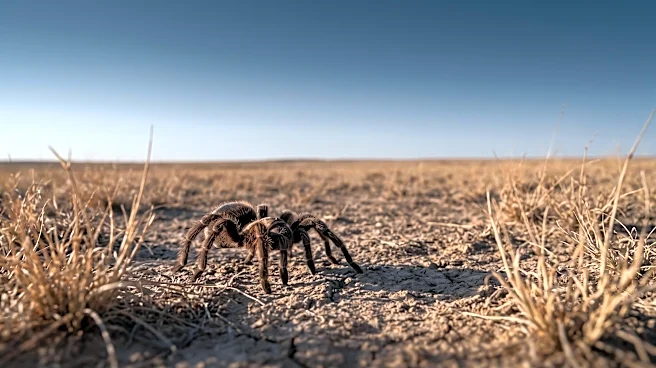
Every fall, the plains of southeast Colorado experience a notable natural event involving tarantulas, which is often mistakenly referred to as a migration. Scientists, however, clarify that this annual occurrence is, in fact, a mating expedition undertaken
by male tarantulas. These large, dark brown to black spiders, belonging to the genus Aphonopelma, emerge from their burrows on the Comanche National Grassland to search for mates. The Comanche National Grassland spans over 443,000 acres, providing an ideal habitat for female tarantulas, who typically remain in their burrows for up to 25 years. Male tarantulas, reaching maturity between 8 to 10 years old, are the primary participants in this seasonal quest, often traveling over a mile in their search. The peak viewing period for this event is from mid-September through October, sometimes extending into November, with most sightings occurring an hour before sunset.
Why It's Important?
Understanding that this event is a mating expedition rather than a migration is crucial for both scientific accuracy and public perception. It highlights the distinct life cycles and behaviors of male and female tarantulas, emphasizing the males' perilous journey to reproduce. This clarification helps educate the public about the specific ecological processes at play, fostering a more informed appreciation for local wildlife. For conservation efforts, distinguishing between migration and mating behavior allows for more targeted strategies to protect these spiders during their vulnerable reproductive phase. The event also draws significant tourism to southeast Colorado, with visitors eager to witness the tarantulas. Accurate information ensures that tourists approach the phenomenon with appropriate respect and understanding, minimizing disturbance to the spiders and their habitat. The region's unique natural attractions, including the tarantulas, contribute to local economies through ecotourism.
What's Next?
As the tarantula mating season continues through the fall, visitors to southeast Colorado are encouraged to observe the spiders responsibly. Local authorities and conservation groups will likely continue to disseminate information clarifying the nature of the event and providing guidelines for safe viewing. This includes advice on not stopping abruptly on highways, pulling over in designated safe areas, and maintaining a respectful distance from the tarantulas. The annual Tarantula Fest in La Junta, scheduled for late September, will continue to serve as a community event that combines education, art, and local festivities around this natural phenomenon. Ongoing scientific research may further uncover details about tarantula behavior, habitat needs, and population dynamics, potentially leading to enhanced conservation measures or changes in public engagement strategies.
Beyond the Headlines
The tarantula mating expedition in Colorado offers a unique lens through which to explore broader themes of ecological balance, human-wildlife interaction, and the impact of scientific understanding on public narratives. The common misconception of a 'migration' versus the reality of a 'mating expedition' underscores how popular media can sometimes oversimplify or misrepresent natural phenomena. This event also highlights the often-overlooked biodiversity within U.S. grasslands and the intricate life cycles of species that play vital roles in their ecosystems. Furthermore, the tarantulas' presence coexists with rich historical and geological landmarks in the region, including dinosaur footprints, ancient rock art, and pioneer settlements. This convergence of natural history and human heritage provides a compelling narrative for regional tourism and education, encouraging visitors to explore the multifaceted stories embedded in the landscape.