





What's Happening?
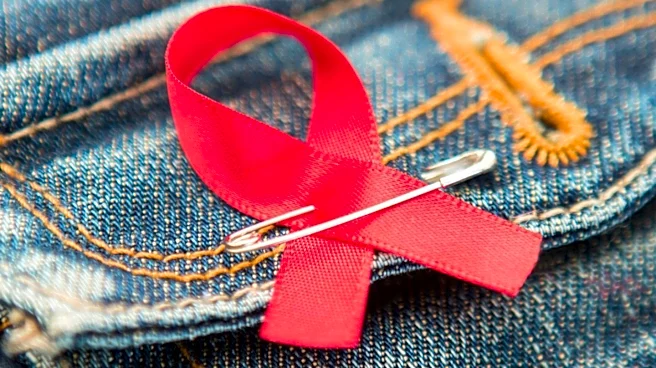
Zambia has surpassed the global 95-95-95 HIV treatment and viral suppression targets, achieving 98-98-97. This significant public health milestone was announced by Vice President Mutale Nalumango during a documentary launch celebrating 30 years of the Peace
Corps in Zambia. Nalumango attributed this success to Zambia's national leadership and substantial investment in its health sector, bolstered by support from the United States through initiatives like the Peace Corps. Over the past two decades, Zambia has implemented one of the world's most impactful national responses to HIV. U.S. Embassy Chargé d’Affaires Mich Coker highlighted that these joint efforts have saved over 1.3 million lives and increased Zambia’s average life expectancy by approximately 20 years. Since 1994, 2,666 Peace Corps volunteers have served in Zambia, working alongside communities on locally led initiatives in health, education, environment, and food security.
Why It's Important?
This achievement underscores the profound impact of international collaboration and sustained investment in public health, particularly in combating global epidemics. For the U.S., the Peace Corps' long-standing presence in Zambia exemplifies its commitment to global health diplomacy and development aid. The success in Zambia demonstrates the effectiveness of U.S. foreign policy tools in fostering self-sufficiency and improving quality of life in partner nations. This model of partnership, where U.S. volunteers work directly with local communities, strengthens bilateral relations beyond governmental levels, building trust and mutual understanding. The significant increase in life expectancy and the millions of lives saved highlight the tangible benefits of these programs, reinforcing the argument for continued U.S. engagement in global health initiatives. It also showcases how targeted aid can lead to measurable and transformative outcomes, serving as a blueprint for addressing other global health challenges.
What's Next?
The continued success of Zambia's HIV response, supported by the Peace Corps and other U.S. initiatives, suggests a potential for further collaboration in public health and other development sectors. The documentary celebrating 30 years of Peace Corps in Zambia aims to highlight these collaborations and share the experiences of Zambian counterparts, community leaders, and volunteers, which could inspire future partnerships and volunteer recruitment. The U.S. Embassy's emphasis on strengthening relationships through individual connections between Zambians and Americans indicates a sustained commitment to these grassroots efforts. Future efforts may focus on maintaining the achieved targets, addressing emerging health challenges, and expanding the scope of community-led initiatives in areas such as education, environment, and food security, building on the established foundation of trust and cooperation.
Beyond the Headlines
The success in Zambia transcends mere statistics, illustrating the deep cultural and social impact of sustained international cooperation. The Peace Corps' approach, which emphasizes learning from and working alongside local communities, fosters a sense of shared ownership and empowerment, rather than dependency. This model helps build local capacity and resilience, ensuring that progress is sustainable even after direct foreign assistance may diminish. The narrative of individual relationships between Zambians and Americans, as highlighted by Chargé d’Affaires Mich Coker, points to the enduring human connection that underpins diplomatic efforts. This long-term engagement contributes to a positive perception of the U.S. abroad, fostering goodwill and strengthening soft power. It also raises ethical considerations about the responsibility of developed nations to support global health and development, demonstrating how such investments can yield significant humanitarian and strategic returns.