
What's Happening?
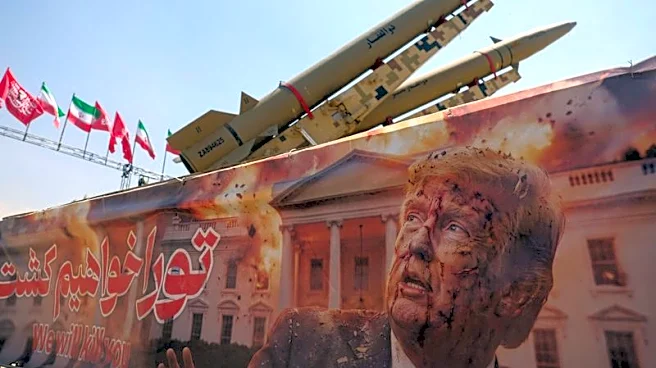
President Trump has backed down from recent military threats against Iran, opting instead for a diplomatic approach. This decision follows a pattern of escalating tensions, where the U.S. had previously
engaged in air raids and naval blockades in response to Iranian actions in the Strait of Hormuz. The situation has been further complicated by Iranian-backed Houthi forces in Yemen, who have declared a blockade in the Red Sea, and drone attacks on Saudi oil facilities. Despite these tensions, Trump announced a potential deal to reopen the Strait of Hormuz, though details remain unclear and the situation is fluid.
Why It's Important?
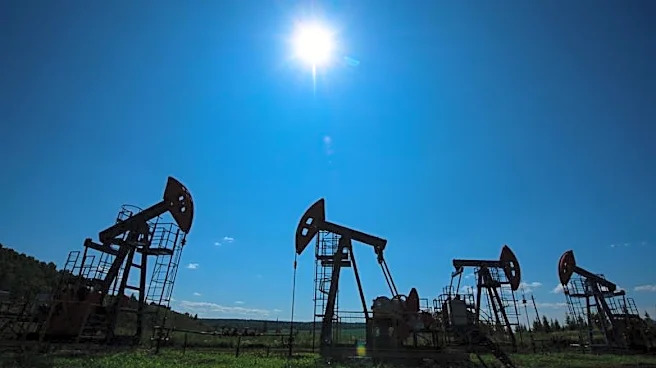
The U.S.-Iran conflict has significant implications for global trade and energy security, particularly given the strategic importance of the Strait of Hormuz. The ongoing tensions have led to disruptions in shipping and increased energy prices, affecting global markets. President Trump's decision to pursue diplomacy reflects the complex interplay of military strategy and international relations, as well as domestic political considerations. The outcome of these negotiations could impact U.S. foreign policy, regional stability, and economic conditions, highlighting the challenges of balancing military action with diplomatic efforts.
What's Next?
The future of U.S.-Iran relations remains uncertain, with potential for both diplomatic breakthroughs and further military confrontations. Key issues include the reopening of the Strait of Hormuz, the lifting of U.S. sanctions, and the broader geopolitical dynamics in the Middle East. The role of regional players, such as Oman and Saudi Arabia, will be crucial in shaping the outcome of these negotiations. Additionally, the impact on global energy markets and U.S. domestic politics will be significant, as stakeholders navigate the complexities of this evolving situation.