







What's Happening?
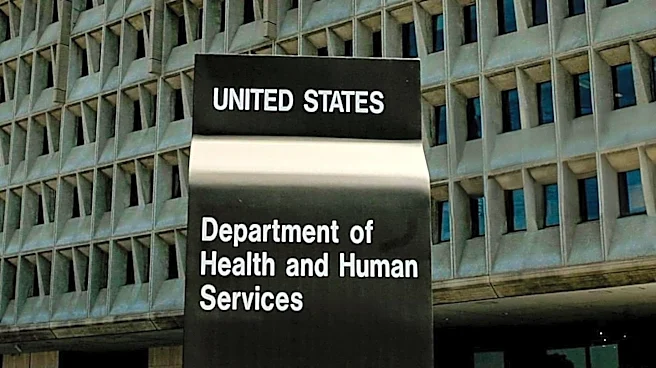
A recent issue brief from the Department of Health and Human Services (HHS) suggests that Medicaid hospital provider taxes increase employer-sponsored insurance premiums, projecting a potential 2.5% reduction in premiums by 2032 if the limit on these
taxes is lowered. However, an analysis by AHA News contends that the HHS study is flawed and fails to establish a causal link between provider taxes and higher premiums. AHA News highlights four key reasons for this conclusion: the findings are highly sensitive to the starting year, the analysis does not account for several key drivers of premium growth, the model does not consider the size of the tax, and the comparison group includes a state with Medicaid hospital taxes. Many states adopted provider taxes during the Great Recession due to budget shortfalls, a period when premium growth slowed nationally.
Why It's Important?
The debate over the causal link between Medicaid provider taxes and commercial premiums is significant for U.S. healthcare policy and economic stakeholders. If the HHS analysis were accurate, it would imply that state efforts to fund Medicaid through provider taxes are inadvertently increasing healthcare costs for employers and individuals. This could lead to policy changes that reduce or eliminate these taxes, potentially jeopardizing Medicaid funding and access to care for vulnerable populations. Hospitals and health systems, which rely on these taxes to support Medicaid programs, argue that such changes would undermine their ability to provide essential services. The AHA's critique emphasizes that a comprehensive understanding of premium growth requires considering factors like insurer pricing, patient demographics, new treatments, and market concentration, rather than solely attributing it to provider taxes. This discussion impacts the financial stability of healthcare providers and the affordability of health insurance for millions of Americans.
What's Next?
The ongoing discussion surrounding the HHS analysis and the AHA's rebuttal will likely influence future policy decisions regarding Medicaid provider taxes. Policymakers will need to consider the validity of the causal link asserted by HHS and the counterarguments presented by the AHA. Further research and more robust analyses that account for a broader range of factors influencing premium growth may be necessary to inform sound policy. Decisions about these taxes will have direct implications for state Medicaid budgets, hospital funding, and ultimately, the cost and accessibility of healthcare services. Stakeholders, including state governments, healthcare providers, insurers, and employers, will continue to advocate for policies that align with their interests, making this a critical area of ongoing policy debate.
Beyond the Headlines
The controversy surrounding the HHS analysis highlights a broader challenge in healthcare policy: accurately attributing the causes of rising healthcare costs. The complexity of the U.S. healthcare system, with its myriad of payers, providers, and regulatory frameworks, makes it difficult to isolate the impact of any single factor. The AHA's critique points to the potential for oversimplification in policy analysis, where correlations might be mistaken for causation. This issue extends beyond provider taxes to other areas of healthcare spending, where various stakeholders often present data to support their policy preferences. A deeper implication is the need for transparent, comprehensive, and methodologically sound research to guide healthcare policy, ensuring that decisions are based on robust evidence rather than potentially flawed analyses. The outcome of this debate could set precedents for how future healthcare financing mechanisms are evaluated and reformed.