



What's Happening?
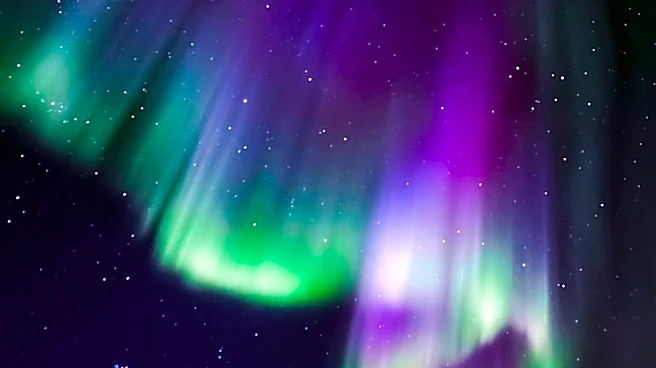
The National Oceanic and Atmospheric Administration (NOAA) forecasts that the northern lights, or aurora borealis, will be visible across parts of the northern United States and much of Canada from July 31 to August 2. This rare summer appearance is driven
by a solar eruption and a coronal hole, which are expected to create geomagnetic activity. The aurora is typically seen between late August and early April, but current conditions suggest visibility in states such as Alaska, Washington, Idaho, Montana, North Dakota, Minnesota, Wisconsin, and Michigan. Skywatchers are advised to seek dark, cloud-free skies for optimal viewing.
Why It's Important?
The visibility of the northern lights in the U.S. presents a unique opportunity for residents and tourists to witness this natural phenomenon outside its usual season. This event could boost local tourism in areas where the aurora is visible, as enthusiasts travel to optimal viewing locations. The occurrence also highlights the influence of solar activity on Earth's atmosphere, offering educational opportunities about space weather and its effects. For communities in the viewing path, the event may foster increased interest in astronomy and natural sciences.
What's Next?
As the weekend progresses, skywatchers are encouraged to monitor real-time aurora forecasts and prepare for viewing by selecting locations with minimal light pollution. The NOAA's 30-minute aurora forecast and other apps can provide updates on auroral activity. With the solar maximum having passed in 2024, similar geomagnetic events may occur with less frequency, making this an opportune moment for enthusiasts to capture the aurora. Future opportunities to view the northern lights may arise as days grow shorter in the fall.