





What's Happening?
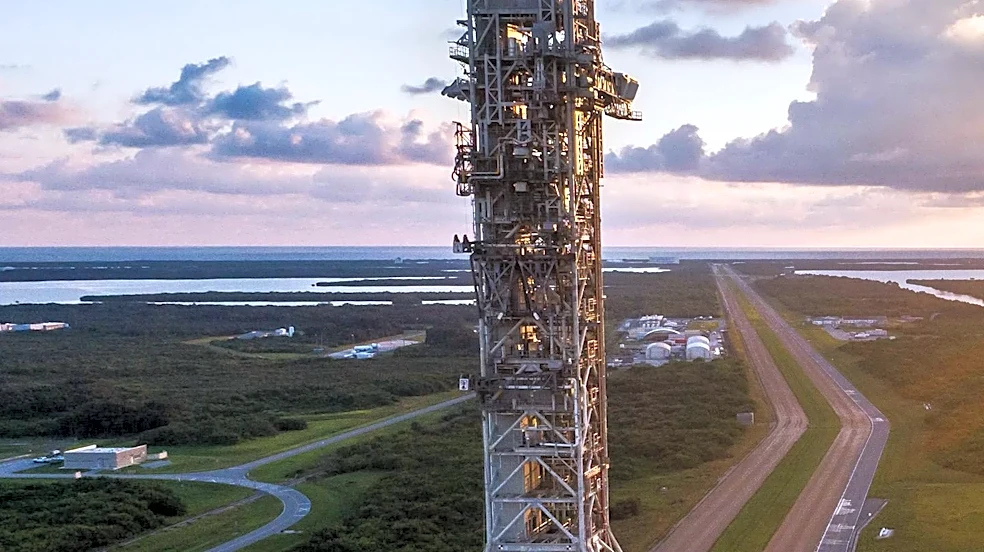
NASA continues to operate two crawler-transporters, massive vehicles originally designed in the 1960s for the Apollo program, to transport its most precious spacecraft to the launch pad at Kennedy Space Center. These machines, each weighing approximately
6.6 million pounds empty and capable of carrying up to 18 million pounds, move at a deliberate speed of about 1.6 kilometers per hour. This slow pace is crucial for ensuring the absolute stability of the colossal and fragile loads they carry. The crawlers have a storied history, having transported Saturn V rockets during the Apollo era and later Space Shuttles for three decades. Despite their age, these vehicles have been refurbished and are now central to the Artemis program, which aims to return astronauts to the Moon. For instance, one of these machines transported the rocket for the uncrewed Artemis I mission in November 2022. NASA maintains that the reliability and proven performance of these six-decade-old machines make them indispensable, as their fundamental function—moving massive loads over short distances with stability—has not changed.
Why It's Important?
The continued reliance on these 1960s-era crawler-transporters highlights a unique aspect of U.S. space infrastructure: the enduring value of robust, reliable engineering over constant technological upgrades in certain critical applications. While many space technologies evolve rapidly, the crawlers demonstrate that for specific, high-stakes tasks like transporting multi-billion-dollar rockets, proven stability and functionality can outweigh the pursuit of novelty. This approach has significant implications for resource allocation within NASA, as it avoids the substantial costs and risks associated with developing and testing new, equally capable transport systems. The crawlers' longevity also underscores the initial foresight and engineering prowess of their designers, providing a cost-effective solution for current and future Artemis missions. Their continued operation ensures that the foundational elements of U.S. space launch capabilities remain steadfast, allowing NASA to focus its innovation efforts on spacecraft and mission technologies rather than ground support equipment that already performs flawlessly.
What's Next?
NASA is expected to continue utilizing these crawler-transporters for all upcoming Artemis missions, including the crewed Artemis III and subsequent lunar endeavors. The machines will remain responsible for the critical task of moving the fully assembled Space Launch System (SLS) rockets and Orion capsules from the Vehicle Assembly Building to the launch pad. Given their proven track record and the high cost and complexity of developing a modern replacement, there are no immediate plans to retire or substitute these vehicles. Future maintenance and refurbishment efforts will likely focus on ensuring their continued operational readiness and safety. The crawlers will remain a visible, albeit slow-moving, symbol of the continuity between past and present U.S. space exploration efforts, bridging the Apollo and Artemis eras. Their ongoing performance will be a silent but essential factor in the success of NASA's ambitious lunar return program.
Beyond the Headlines
The story of NASA's crawler-transporters offers a compelling counter-narrative to the prevailing emphasis on rapid technological obsolescence and constant innovation. It illustrates that in certain highly specialized and safety-critical domains, the 'if it ain't broke, don't fix it' philosophy holds profound merit. This approach has broader implications for infrastructure planning and investment, suggesting that sometimes, investing in durable, over-engineered solutions can yield long-term benefits in terms of reliability and cost-effectiveness. The crawlers also serve as a tangible link to the golden age of American space exploration, connecting the historical achievements of Apollo with the future aspirations of Artemis. Their continued use highlights a cultural aspect of NASA—a blend of cutting-edge science with a deep respect for foundational engineering that has stood the test of time, reminding us that not all progress requires discarding the old for the new, especially when the old performs its essential task with unparalleled precision and reliability.