


What's Happening?
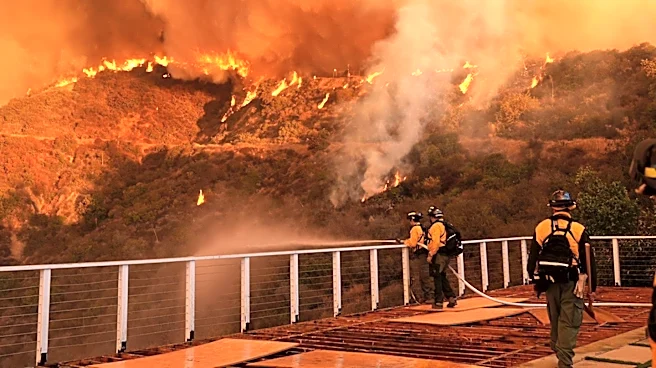
A significant brush fire, named the 'Bike Fire,' erupted in Santa Clarita, California, near the intersection of Cambria Estates Lane and Ravenhill Road. First reported before 1:45 p.m. on Sunday, the blaze rapidly escalated to a third-alarm incident.
By 3 p.m., the fire had consumed 172 acres and was threatening nearby residential areas. As a result, Cal Fire issued evacuation orders for several zones, including SCL-SULTUS, NADEU-A, SCL-SANDSOUTH-B, and SCL-MACMILLAN. Additionally, evacuation warnings were put in place for SCL-NADEU-B, SCL-CRYSTALSPRINGS, SCL-WOODLAND, SCL-SANDSOUTH-A, LAC-E119-A, and SCL-FAIROAKSRANCH. Emergency services have established a shelter for evacuees at the College of the Canyons, with provisions for small animals at the Santa Clarita Valley Animal Care Center and large animals at the Antelope Valley Fairgrounds. The cause of the fire remains under investigation.
Why It's Important?
This incident highlights the ongoing threat of wildfires in Southern California, particularly during dry conditions. The rapid spread of the fire and the immediate need for evacuations underscore the vulnerability of communities located in or near wildland-urban interfaces. Such events place significant strain on local emergency services, requiring substantial resources for firefighting, evacuation management, and resident support. For affected residents, the immediate impact includes displacement, potential property loss, and considerable stress. Economically, wildfires can lead to extensive damage to infrastructure, increased insurance costs, and disruptions to local businesses. The frequency and intensity of these fires also raise broader questions about land management practices, climate change impacts, and the effectiveness of current preventative measures in fire-prone regions.
What's Next?
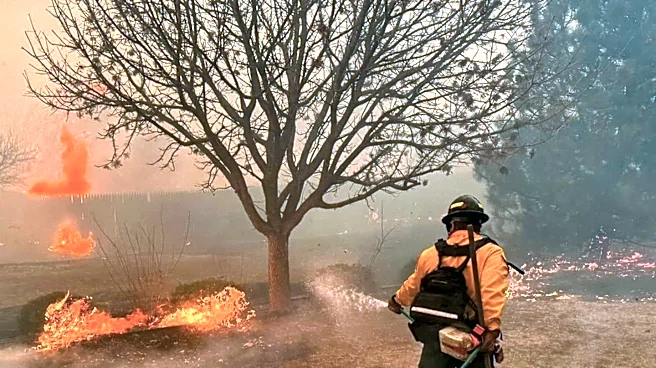
Firefighting efforts are ongoing, with crews working to contain the blaze and protect threatened structures. Residents under evacuation orders will remain displaced until authorities deem it safe to return, which depends on the fire's containment and the assessment of any immediate dangers. Investigations into the fire's origin will commence once the situation is under control, aiming to determine the cause and prevent future occurrences. Local authorities will continue to provide updates on containment progress, evacuation status, and available resources for affected individuals. The community will likely face a period of recovery and assessment of damages once the immediate threat has passed, potentially involving long-term rebuilding efforts and support services for those who have lost homes or property.
Beyond the Headlines
The recurring nature of significant brush fires in California points to a complex interplay of environmental factors, human activity, and climate patterns. Beyond the immediate crisis, these events often spark discussions about sustainable urban planning, the efficacy of early warning systems, and the psychological toll on communities living under constant threat of wildfires. There is also a growing focus on preventative measures, such as defensible space creation around homes, controlled burns, and advanced fire detection technologies. The economic burden extends beyond direct property damage to include long-term health impacts from smoke exposure and the broader ecological consequences of habitat destruction. This fire, like many others, serves as a stark reminder of the need for comprehensive strategies to mitigate wildfire risks and enhance community resilience in fire-prone regions.