






What's Happening?
The Charlotte Regional Transportation Planning Organization (CRTPO) has approved the I-77 toll lane project with a vote of 64-5. This decision reverses a previous vote from May that had halted the project. The approval came after the city of Charlotte also
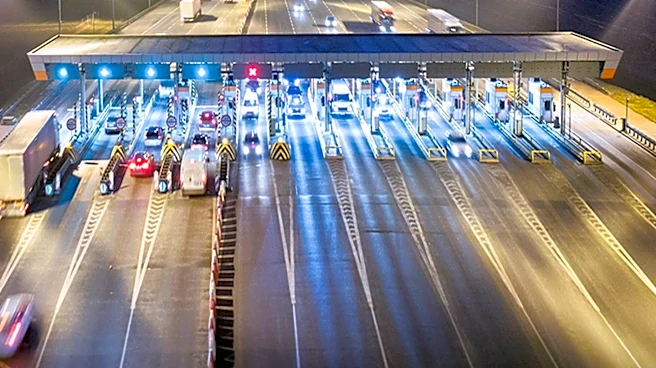
reversed its stance and decided to support the project. The state of North Carolina had threatened significant fines if the project was not reinstated, and the N.C. Department of Transportation offered financial assistance to improve neighborhoods near uptown affected by the widening. The project involves adding two toll lanes in each direction along an 11-mile stretch of I-77, extending from uptown Charlotte to the South Carolina border. Following the vote, Davidson Mayor Rusty Knox and Matthews Mayor John Higdon announced their resignations from the panel, citing frustration with what they described as heavy-handedness from Raleigh and capitulation to powerful business interests.
Why It's Important?
The approval of the I-77 toll lane project carries significant implications for regional transportation infrastructure and local governance in the Charlotte metropolitan area. For commuters, the project aims to alleviate traffic congestion on a critical interstate corridor, potentially improving travel times and connectivity between Charlotte and its southern suburbs. However, the introduction of toll lanes also means new costs for drivers, which could disproportionately affect lower-income residents or those who commute frequently. Economically, the project's continuation could benefit businesses reliant on efficient transportation of goods and services, while also creating construction jobs. The controversy surrounding the vote highlights ongoing tensions between state and local authorities, particularly concerning infrastructure development and funding. The resignations of two mayors underscore a perceived lack of local autonomy and the influence of state mandates and business interests on regional planning decisions. This situation could set a precedent for how future large-scale infrastructure projects are negotiated and implemented across North Carolina, especially when local objections are met with state-level pressure.
What's Next?
With the Charlotte Regional Transportation Planning Organization's approval, the I-77 toll lane project is now set to move forward. Construction and implementation phases for the 11-mile stretch of I-77, which will include two toll lanes in each direction, are expected to commence or continue as planned. The N.C. Department of Transportation's promised funds for neighborhood improvements near uptown, intended to mitigate the impact of the widening, will likely be allocated and utilized in the coming months. The resignations of Davidson Mayor Rusty Knox and Matthews Mayor John Higdon from the CRTPO could lead to shifts in the composition and dynamics of the planning organization, potentially influencing future regional transportation discussions. It is also possible that community groups and activists who opposed the project will continue to voice their concerns or explore other avenues to challenge aspects of the toll lane implementation, particularly regarding the financial burden on residents and the perceived influence of business interests. The long-term impact on traffic flow, local economies, and community satisfaction will be closely monitored as the project progresses.
Beyond the Headlines
The I-77 toll lane project's approval, despite local objections and a prior vote to halt it, reveals deeper issues concerning regional governance, state preemption, and the balance of power in infrastructure development. The 'heavy-handedness' from Raleigh, as described by local mayors, highlights a recurring tension where state-level mandates and financial incentives can override local democratic processes and community preferences. This scenario raises questions about the true extent of local control over projects that profoundly impact daily life and local economies. Furthermore, the accusation of 'powerful business interests' influencing the decision points to concerns about corporate lobbying and its role in shaping public policy, potentially at the expense of broader public sentiment. The project's reliance on tolling also touches upon equity issues, as it introduces a user fee for infrastructure that was once publicly funded, potentially creating a two-tiered system of access based on ability to pay. This could exacerbate socio-economic disparities, making essential commutes more expensive for some residents. The long-term implications extend to public trust in governmental bodies and the effectiveness of regional planning organizations in representing diverse community interests.