







What's Happening?
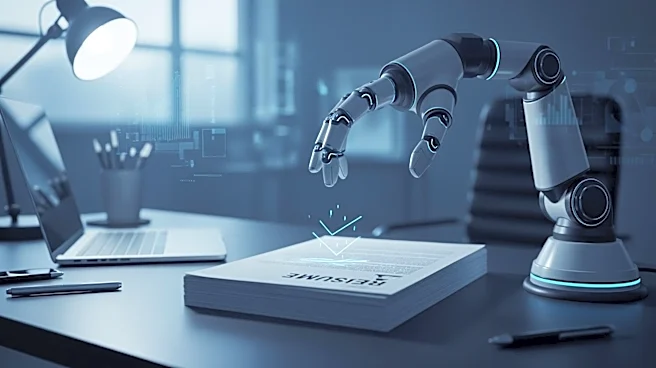
The integration of artificial intelligence (AI) into the workforce is significantly affecting the job market for recent college graduates, particularly in the tech sector. A report by ZipRecruiter highlights that entry-level tech positions are becoming
scarcer, with increased competition among graduates. This trend is exacerbated by the rise of AI, which, while boosting productivity, also threatens to replace certain job roles. As a result, many graduates are turning to 'income stacking'—holding multiple jobs to ensure financial security. A survey by Fiverr indicates that 67% of Gen Z view this strategy as essential. The shift towards AI is prompting educational institutions to reconsider their curricula to better prepare students for an AI-dominated job market.
Why It's Important?
The growing influence of AI on the job market has profound implications for the U.S. economy and workforce. As AI continues to automate tasks, the demand for traditional entry-level positions may decline, leading to increased job insecurity among new graduates. This could result in a more competitive job market, where only those with specialized skills in AI and technology management thrive. The trend towards income stacking reflects a broader economic shift, where individuals seek diverse income streams to mitigate the risks associated with job displacement. This shift could influence labor policies and educational strategies, as institutions strive to equip students with the skills needed to navigate an AI-driven economy.
What's Next?
As AI continues to reshape the job landscape, educational institutions may need to accelerate the integration of AI-related skills into their programs. This could involve expanding AI literacy and offering more specialized courses in machine learning, data analysis, and cybersecurity. Additionally, policymakers might consider developing initiatives to support workers transitioning into new roles created by AI advancements. The job market's evolution will likely prompt ongoing discussions about the balance between technological innovation and job security, influencing future labor regulations and economic strategies.