











What's Happening?
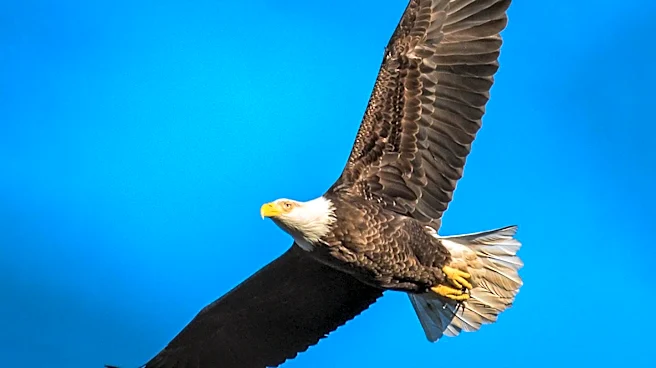
Feliks, a year-old eastern imperial eagle from Serbia, has returned home after being kidnapped and sold illegally in the Middle East. The eagle, which began its migratory flight in August, was captured by poachers in Syria and later sold in Lebanon. The rescue
mission, led by Michel Sawan of the Lebanese Association for Migratory Birds, involved a complex network of contacts and a daring cross-border operation. Feliks was eventually smuggled back into Lebanon by refugees and returned to Serbia on a military transport plane. The incident highlights the ongoing issue of illegal wildlife trade and the efforts of animal protection groups to combat it.
Why It's Important?
The return of Feliks underscores the persistent threat of illegal wildlife trade, which poses a significant risk to endangered species like the eastern imperial eagle. This case highlights the challenges faced by conservationists in protecting migratory birds from poaching and illegal sales. The successful rescue operation demonstrates the importance of international cooperation and the dedication of animal protection groups. The incident also draws attention to the broader environmental and ethical issues surrounding wildlife trafficking, which can have devastating impacts on biodiversity and ecosystems.
What's Next?
Feliks is currently in quarantine in a Serbian zoo and will be fitted with a new transmitter before being released back into the wild. The Bird Protection and Study Society of Serbia (BPSSS) continues its efforts to protect and increase the population of eastern imperial eagles through habitat restoration and monitoring. The organization faces ongoing challenges, including accidental poisoning and threats from electrical cables. The successful return of Feliks may inspire further international collaboration to combat wildlife trafficking and protect endangered species.
Beyond the Headlines
The story of Feliks highlights the ethical and legal challenges in wildlife conservation. The illegal trade of animals not only threatens species survival but also raises questions about the enforcement of international wildlife protection laws. The involvement of refugees in the rescue operation illustrates the complex socio-political dynamics in regions affected by conflict, where wildlife trafficking can thrive. This case may prompt further discussions on strengthening legal frameworks and international cooperation to address wildlife crime.