







What's Happening?
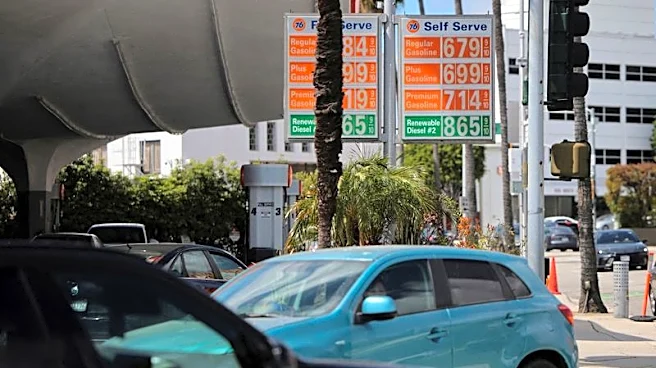
Inflation in the United States saw a significant increase in March, driven by the ongoing conflict between the U.S. and Iran. The consumer price index rose by 3.3% compared to the previous year, marking a rise from 2.4% in February. This increase is largely
attributed to the surge in energy prices, particularly oil, as Iran has restricted ship traffic through the Strait of Hormuz, a crucial passage for global oil supply. The conflict has led to a spike in oil prices, with Brent crude oil reaching $118 per barrel by the end of March. The rise in energy costs has also impacted other sectors, including airfare and food prices, as airlines and grocery stores adjust to higher operational costs. The Federal Reserve is closely monitoring the situation, as the inflationary pressures complicate interest rate policy decisions.
Why It's Important?
The inflationary impact of the Iran conflict is significant for U.S. consumers and the broader economy. Higher energy prices lead to increased costs for transportation and goods, affecting household budgets and consumer spending. The Federal Reserve faces challenges in managing interest rates amidst rising inflation, which could influence borrowing costs and economic growth. Additionally, sectors such as travel and retail are experiencing price hikes, which may reduce consumer demand and impact business revenues. The prolonged conflict risks further inflationary pressures, potentially leading to broader economic consequences if not resolved swiftly.
What's Next?
The U.S. and Iran have agreed to a temporary two-week ceasefire, which may provide some relief if the Strait of Hormuz reopens. However, the situation remains uncertain, and prolonged conflict could sustain high inflation rates. The Federal Reserve may need to adjust its interest rate policy depending on the conflict's duration and impact on inflation. Businesses and consumers will continue to face challenges as they navigate rising costs, and policymakers will need to address the economic implications of the conflict.
Beyond the Headlines
The Iran conflict highlights the vulnerability of global supply chains and the interconnectedness of geopolitical events with economic stability. The reliance on oil from the Middle East underscores the need for diversified energy sources and investment in renewable energy to mitigate such risks. The situation also raises ethical considerations regarding the impact of geopolitical conflicts on civilian populations and economic stability.