




What's Happening?
Montgomery County is implementing new pedestrian safety signals at various intersections in response to 38 pedestrian traffic fatalities this year. The Montgomery County Department of Transportation (MCDOT) has recently installed four traffic signals and
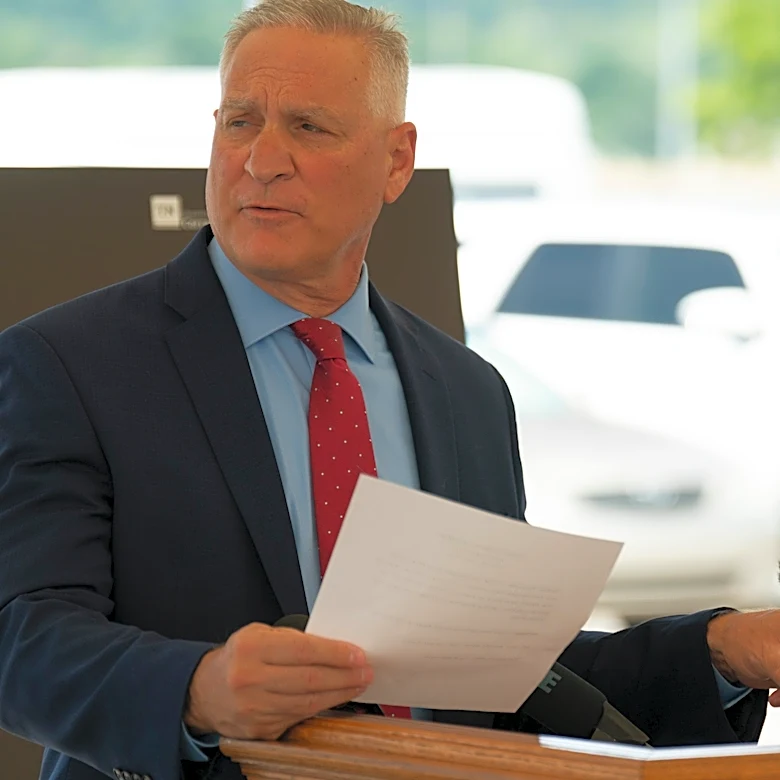
two push-button signals at Old Georgetown Road at Cordell Avenue and Darnestown Road at Yearling Place, with plans for four additional push-button signals in the same vicinity. Traffic signals were also installed this summer near Rock Creek Forest Elementary in Chevy Chase and Wheaton Woods Elementary in Wheaton, as well as at the intersection of Bel Pre Road and Rippling Brook Drive in Aspen Hill, close to Argyle Middle School. MCDOT Director Chris Conklin stated that these installations address concerns from residents, including parents of elementary school students. County Executive Marc Elrich highlighted that over half of serious and fatal crashes in the county occur at or near intersections, emphasizing the effectiveness of protected crossings in reducing injuries and deaths. There are 26 additional signalized crossings in progress, with 20 in the planning or design phase and six with scheduled construction dates.
Why It's Important?
The installation of new pedestrian signals in Montgomery County is a critical public safety initiative directly addressing a significant increase in pedestrian fatalities. With 38 deaths this year, the county is facing a serious challenge in ensuring the safety of its residents, particularly in high-traffic areas and near schools. This effort underscores the importance of local government responsiveness to community concerns and data-driven decision-making in urban planning. The focus on protected crossings reflects a broader understanding that infrastructure improvements are essential for preventing accidents and saving lives. The involvement of residents in identifying hazardous areas, as noted by MCDOT Director Chris Conklin, highlights the value of community engagement in shaping public safety policies. This initiative could serve as a model for other U.S. counties grappling with similar pedestrian safety issues, demonstrating how targeted infrastructure investments can mitigate risks and improve overall quality of life.
What's Next?
Montgomery County plans to continue its efforts to enhance pedestrian safety with 26 additional signalized crossings currently in various stages of development. Twenty of these projects are in the planning or design phase, while six have scheduled construction dates. The Montgomery County Department of Transportation (MCDOT) will likely continue to conduct safety audits and review traffic data to identify further areas for improvement. Residents are encouraged to participate in the county's 2026 Community Survey, which measures the 'livability' of its communities, including safety aspects. The results of this survey will inform future county services and budget decisions, potentially influencing the allocation of resources for additional pedestrian safety measures. The ongoing collaboration between county officials and residents, as demonstrated by the response to community concerns, suggests a continued focus on addressing pedestrian safety as a priority.
Beyond the Headlines
The surge in pedestrian fatalities in Montgomery County, leading to the installation of new safety signals, points to a broader societal challenge concerning urban design and transportation infrastructure in the U.S. This issue extends beyond mere traffic management, touching upon the ethical responsibility of local governments to create safe environments for all citizens, especially vulnerable populations like pedestrians and schoolchildren. The emphasis on protected crossings reflects an evolving understanding of urban mobility, moving away from car-centric planning towards more inclusive and human-centered designs. This development could trigger long-term shifts in how U.S. cities approach urban planning, prioritizing pedestrian safety and accessibility. It also highlights the potential for legal implications, as increased fatalities could lead to greater scrutiny of municipal liability and calls for more stringent safety standards. Culturally, it may foster a greater awareness of pedestrian rights and the need for shared responsibility among all road users.