








What's Happening?
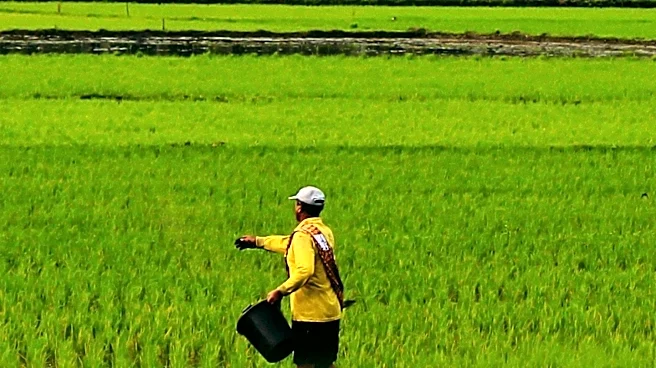
Indonesia has achieved significant milestones in food self-sufficiency, as highlighted by Coordinating Minister for Food Affairs, Zulkifli Hasan. Speaking at the 8th Indonesian Muslim Congress, Hasan emphasized the country's success in becoming self-reliant
in key food commodities such as rice, corn, table sugar, chicken eggs, chicken meat, and fish. This achievement comes in response to a global trend towards protectionism, where countries are prioritizing domestic food supplies over exports. Indonesia's government has shifted from import-centered policies to initiatives that empower local farmers, including improved selling prices for unhusked rice and expanded access to fertilizers. The country recorded a surplus of 4.2 million metric tons of rice in 2025, contrasting with the 4.5 million tons imported the previous year.
Why It's Important?
Indonesia's move towards food self-sufficiency is significant in the context of increasing global protectionism, which poses challenges to international trade and food security. By reducing reliance on imports, Indonesia not only strengthens its food security but also enhances its national dignity and economic stability. This shift supports local farmers, potentially leading to improved livelihoods and economic growth within the agricultural sector. The strategy also positions Indonesia as a model for other nations facing similar challenges, demonstrating the benefits of self-reliance in essential commodities. Furthermore, the focus on empowering farmers aligns with broader goals of equitable welfare and sustainable development.
What's Next?
Indonesia plans to continue its efforts towards achieving energy self-sufficiency, with initiatives to expand diesel fuel production and increase ethanol blending. Ethanol production from cassava, corn, or sugarcane is being pursued to complement the country's food security strategy. The government is likely to maintain its focus on empowering local farmers and enhancing agricultural productivity. Additionally, Indonesia may seek to share its successful strategies with other countries facing similar challenges, potentially influencing global agricultural policies and practices.
Beyond the Headlines
The emphasis on food self-sufficiency in Indonesia highlights the broader implications of global protectionism on international trade and food security. As countries increasingly prioritize domestic needs, there may be shifts in global supply chains and trade relationships. Indonesia's approach underscores the importance of national strategies that balance self-reliance with international cooperation. The focus on empowering local farmers also raises questions about sustainable agricultural practices and the role of government policies in supporting rural communities. These developments could lead to long-term shifts in how countries approach food security and economic resilience.