








What's Happening?
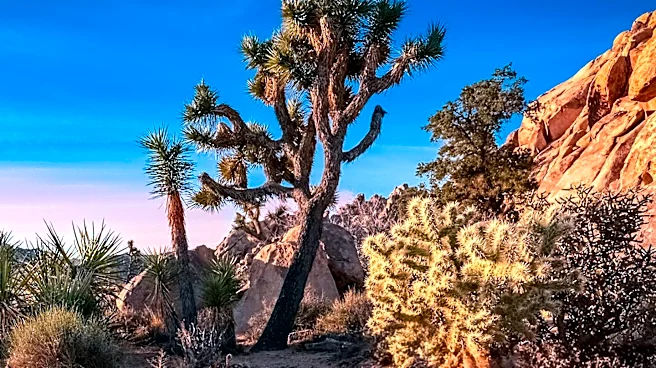
Joshua Tree National Park, a prominent California desert landscape, is often mistakenly associated with U2's iconic 1987 album, 'The Joshua Tree.' Recent clarifications highlight that the album's visual identity draws from three distinct locations, none
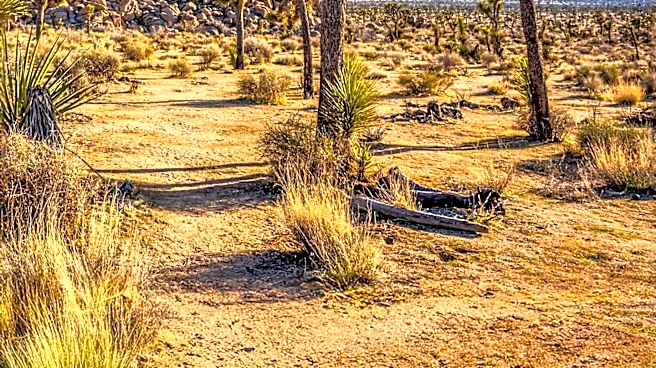
of which is exclusively the national park itself. The famous front-cover photograph of the band was taken at Zabriskie Point in Death Valley. The solitary Joshua tree that became a symbol for the album was located near Darwin, California, and has since fallen around 2000. Joshua Tree National Park, situated further south, is a separate destination, despite sharing the name and featuring the same species of Yucca brevifolia. This distinction is crucial for understanding the album's visual narrative, which was a journey through the California desert rather than a focus on a single, contained location.
Why It's Important?
This clarification is important for several reasons. For tourism and conservation, it helps manage visitor expectations and directs attention to the unique characteristics of Joshua Tree National Park, separate from its pop culture associations. Misconceptions can lead to overcrowding in specific areas or disappointment if visitors expect to find the exact scenes depicted on the album cover within the park. For cultural and historical understanding, it provides a more accurate account of the creative process behind 'The Joshua Tree' album, emphasizing the broader Californian desert as its muse. It also highlights how an image can outlast its subject, as the original album tree is no longer standing, yet its symbolism persists. This distinction encourages a deeper appreciation for the diverse landscapes of the California desert and the specific ecological and geological features of Joshua Tree National Park.
What's Next?
Moving forward, increased awareness of these distinctions could lead to more targeted educational efforts by the National Park Service and local tourism boards. These efforts might focus on promoting the unique natural beauty and recreational opportunities within Joshua Tree National Park, independent of its U2 connection. Visitors might be encouraged to explore the park's diverse ecosystems, rock formations, and stargazing opportunities, rather than solely seeking out a specific, non-existent 'U2 tree.' Additionally, photographers and artists may be inspired to capture the park's essence in new ways, moving beyond the established imagery to create fresh perspectives. This could foster a more authentic engagement with the park's environment and its conservation needs.
Beyond the Headlines
The story of 'The Joshua Tree' album's visual origins and its relationship with Joshua Tree National Park delves into the broader implications of how popular culture shapes our perception of natural landscapes. It underscores the power of imagery to create enduring symbols, even when those symbols are detached from their original context or location. This phenomenon can influence public engagement with environmental issues, as iconic representations might overshadow the complex realities of conservation and ecological preservation. The narrative also touches on the ethical considerations of artistic interpretation versus factual representation, particularly when dealing with natural landmarks. Ultimately, it prompts reflection on how we consume and interpret visual information, and the responsibility of creators and audiences alike to understand the true origins and implications of the stories we tell about places.