



What's Happening?
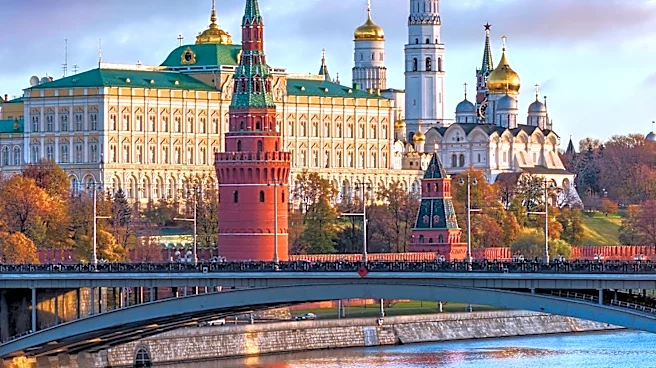
Russian oligarchs and businesses have reportedly contributed nearly 400 billion rubles (approximately 3.9 billion Euros) in 'voluntary contributions' to the state budget by mid-August. This influx of funds, which is 1.5 times the amount projected for
the entire year 2025, follows an appeal made in March to entrepreneurs. The Russian economic newspaper 'Vedomosti' reported that the majority of these funds were received after this appeal. While the exact allocation of these funds remains unclear, they are believed to be addressing a significant deficit in the Russian budget, largely caused by the escalating costs of the ongoing conflict in Ukraine. The Kremlin has previously increased income and value-added taxes to finance the war, and there are discussions about potentially introducing a windfall tax for the financial sector in the autumn to generate additional revenue.
Why It's Important?
This development highlights the financial strain the conflict in Ukraine is placing on Russia's state budget and the Kremlin's efforts to secure alternative funding sources. The reliance on 'voluntary contributions' from oligarchs and businesses suggests a potential shift in how the Russian government finances its military operations, possibly indicating the limitations of traditional tax revenues and the impact of Western sanctions. For the U.S. and its allies, this could signal the effectiveness of economic sanctions in pressuring the Russian economy, even as Russia seeks internal solutions. The willingness of prominent business figures to contribute substantial amounts could also reflect a complex dynamic of loyalty, pressure, or self-preservation within Russia's economic elite, with potential implications for future economic stability and political alignment within the country.
What's Next?
The Russian government may continue to explore additional measures to bolster its finances, including the potential introduction of a windfall tax on the financial sector in the autumn, as reported by 'Vedomosti.' The ongoing conflict in Ukraine will likely continue to exert pressure on the Russian budget, necessitating further financial strategies. The international community, particularly the U.S. and European Union, will likely monitor these financial maneuvers to assess the effectiveness of existing sanctions and consider potential new measures. The long-term impact on Russia's economy and the relationship between the Kremlin and its business elite will be a key area of observation, as the financial burden of the conflict persists.
Beyond the Headlines
The reported 'voluntary contributions' from Russian oligarchs raise questions about the nature of the relationship between the state and private enterprise in Russia, particularly during times of national crisis. While presented as voluntary, such large-scale contributions could be interpreted as a form of implicit taxation or a demonstration of loyalty under pressure, especially given the Kremlin's tight control over key economic sectors. This dynamic could further entrench the power of the state over the economy and potentially limit the independence of Russian businesses. Furthermore, the ongoing financial demands of the conflict could lead to a re-evaluation of economic priorities within Russia, potentially impacting social programs or other non-military sectors as resources are diverted to support military efforts.