



What's Happening?
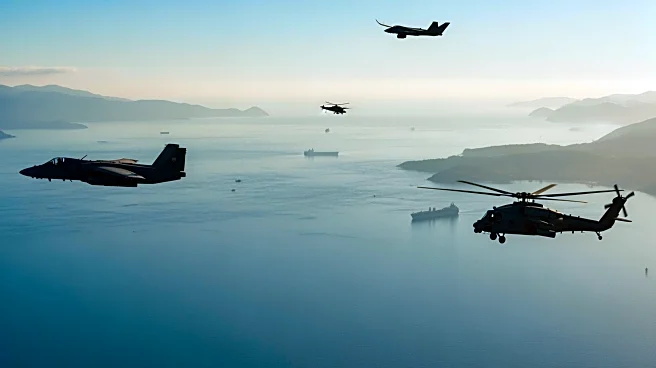
The United States has intensified its military operations to reopen the Strait of Hormuz, a critical waterway for global oil trade, by deploying A-10 Thunderbolt II jets and Apache helicopters. These aircraft are targeting Iranian naval assets that have
been obstructing commercial shipping. The U.S. Central Command released footage showing the destruction of Iranian naval targets, emphasizing the strategic importance of the Strait, which connects the Persian Gulf with the Gulf of Oman. The closure of the Strait by Iran has led to a significant increase in oil prices, surpassing $100 per barrel. The U.S. military's actions are part of a broader effort to ensure the free flow of commerce in the region, with the involvement of allied forces using Apaches to counter drone threats.
Why It's Important?
The reopening of the Strait of Hormuz is crucial for maintaining stability in global oil markets, as a significant portion of the world's oil supply passes through this narrow waterway. The U.S. military's actions aim to mitigate the economic impact of the closure, which has already led to a spike in oil prices. This development underscores the geopolitical tensions between the U.S. and Iran, with potential implications for international relations and energy security. The deployment of military assets highlights the U.S.'s commitment to safeguarding international shipping routes and deterring aggressive actions by Iran that threaten global trade.
What's Next?
The U.S. administration, under President Trump, is reportedly considering further measures to pressure Iran into reopening the Strait, including the potential seizure or blockade of Kharg Island, a key oil export hub for Iran. Such actions could further escalate tensions in the region, prompting reactions from Iran and possibly affecting diplomatic relations with other countries involved in the global oil trade. The situation remains fluid, with ongoing military operations and strategic decisions likely to shape the future of U.S.-Iran relations and the stability of the Middle East.