
What's Happening?
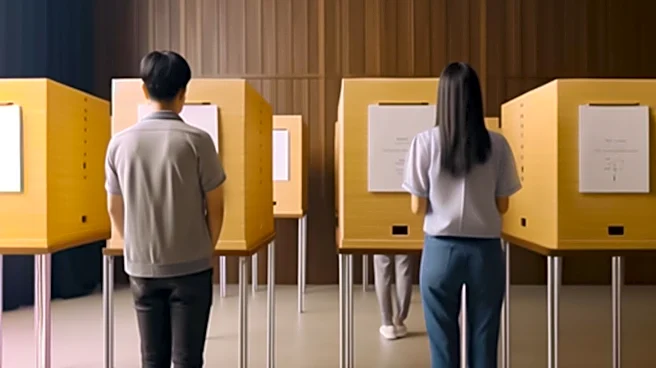
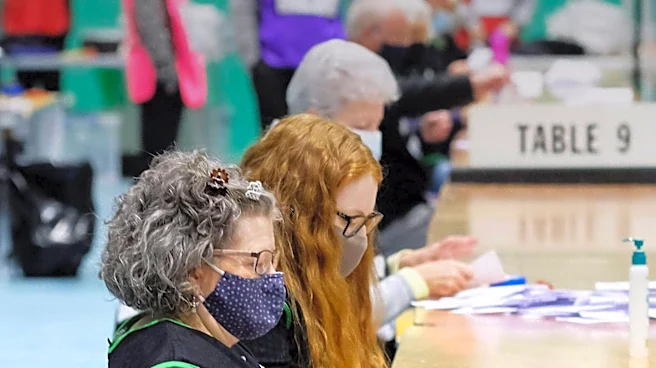
Colorado's recent primary election witnessed a turnout of nearly 36% of the state's 4 million active registered voters, marking the second highest primary turnout since 2010. The election saw significant
participation from Democratic voters, with a turnout of 48%, compared to 41% for Republicans. Unaffiliated voters, who make up more than half of the state's registered voters, had a turnout of only 28%. The primary election was characterized by heightened voter engagement, particularly among Democrats, driven by frustration with national politics and the Trump administration. The primary featured several contested races, including challenges to incumbents like U.S. Rep. Diana DeGette and U.S. Sen. Michael Bennet.
Why It's Important?
The increased turnout in Colorado's primary election highlights a growing political engagement among voters, particularly in a state with a significant number of unaffiliated voters. This trend could influence future elections, as higher primary participation often translates to increased voter turnout in general elections. The engagement of unaffiliated voters, who played a substantial role in the Democratic primary, underscores the importance of reaching out to this demographic. The primary results also reflect broader national trends of political polarization and dissatisfaction with traditional party politics, which could impact party strategies and candidate selection in upcoming elections.
What's Next?
As Colorado moves towards the general election, political parties may need to adjust their strategies to engage unaffiliated voters and address the issues that drove higher primary turnout. The results of the primary could influence the dynamics of the general election, with Democrats potentially gaining an advantage due to their higher primary participation. Political analysts and campaign strategists will likely focus on understanding the motivations of unaffiliated voters and how to effectively mobilize them. The outcome of the general election could have implications for state and national politics, particularly in shaping legislative priorities and policy directions.