






What's Happening?
The Meridian City Council has agreed to postpone further discussion on the proposed Syringa Crossing development until December. This decision came at the request of the developer, Hawkins, following significant opposition from nearly 200 residents of neighboring
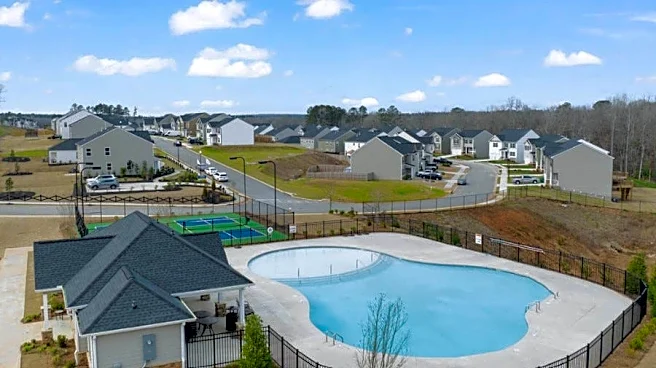
South Meridian subdivisions. The planned 55-acre mixed-use subdivision, located at the southwest corner of Amity and Meridian roads, is slated to include commercial and residential construction, parkland, and a pathway. Developer documents from 2025 indicated plans for over 400 families in apartments and townhomes. Residents, led by Pauline Skaggs, creator of the petition, have voiced concerns regarding increased traffic congestion, noise pollution, and the visual impact of three- and four-story apartment buildings near their homes. The development had previously received recommendations for denial at city Planning & Zoning meetings in April and August, and earlier city council discussions resulted in postponements or referrals back to Planning & Zoning. Ethan Mansfield, a development manager with Hawkins, stated that the developer reviewed the petition and deemed it appropriate to meet with residents to address their concerns in more detail.
Why It's Important?
This postponement highlights the growing influence of community activism and resident concerns in local urban development projects. The Syringa Crossing development, if approved, would significantly alter the landscape and infrastructure of South Meridian, impacting traffic flow, local services, and the quality of life for existing residents. The opposition underscores a common tension between urban growth initiatives and the preservation of community character and resources. For developers, the delay signifies increased costs and the necessity of engaging more thoroughly with community stakeholders to mitigate opposition. For local government, it demonstrates a responsiveness to constituent concerns, potentially setting a precedent for future development proposals in the area. The outcome of this project could influence how similar mixed-use developments are approached in rapidly growing suburban areas, emphasizing the need for comprehensive community engagement and impact assessments.
What's Next?
The Meridian City Council is scheduled to resume discussions on the Syringa Crossing development in December. During this interim period, developer Hawkins plans to meet with concerned residents to discuss the project in more detail and address their objections regarding traffic, noise, and building height. The developer's ability to alleviate these concerns will likely be crucial in determining the project's future. Residents, having successfully prompted a delay, will likely remain organized and vocal, continuing to advocate for their interests. The city council will then have to weigh the developer's revised proposals, community feedback, and the recommendations from the Planning & Zoning commission. The decision in December will either pave the way for the development to proceed, potentially with modifications, or lead to its further delay or denial, reflecting the ongoing balance between urban expansion and community preservation.
Beyond the Headlines
The Syringa Crossing case reflects broader trends in suburban development across the U.S., where rapid population growth often clashes with existing community infrastructure and resident expectations. The concerns raised by Meridian residents—traffic, noise, and the scale of new construction—are common in many expanding metropolitan areas. This situation also touches upon the evolving role of local planning and zoning boards, which are increasingly tasked with mediating between developers seeking to maximize land use and residents advocating for sustainable growth and quality of life. The outcome could influence future development patterns in Meridian, potentially leading to more stringent requirements for community impact studies or increased emphasis on public-private partnerships that address infrastructure strain. It also highlights the power of organized citizen groups in shaping local policy and development outcomes, reinforcing the importance of civic engagement in urban planning processes.