






What's Happening?
Kings County groundwater agencies are in a critical race against time to prevent mandatory state pumping limits, which could be imposed by the end of 2027. These agencies are working to submit a new, unified groundwater plan to the state Water Resources
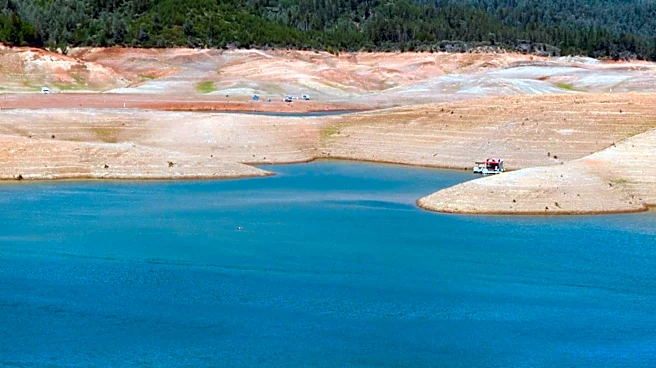
Control Board by April 2027. However, the Water Board staff has already begun drafting its own mandatory pumping plan for the region, expected to be released next summer. The urgency stems from severe land subsidence in the Tulare Lake subbasin, which encompasses most of Kings County. This subbasin was placed on probation in April 2024 by the Water Board due to an inadequate groundwater plan to address subsidence and protect domestic drinking wells. Probation currently requires farmers to meter and register their wells annually, report pumping data, and pay a fee per acre-foot pumped, with potential increases under a state-imposed plan.
Why It's Important?
This situation carries significant implications for the agricultural industry and local economies in Kings County. Mandatory state pumping limits, or even moratoriums, could severely restrict water availability for farming, a cornerstone of the region's economy. The potential increase in fees for pumped water would also add to operational costs for farmers, impacting profitability and potentially leading to reduced agricultural output. The ongoing land subsidence not only threatens infrastructure but also indicates a critical depletion of groundwater resources, which are vital for long-term sustainability. The state's intervention underscores a broader challenge in managing water resources in California, particularly in regions heavily reliant on groundwater. The outcome will determine the balance between agricultural needs, environmental protection, and the state's regulatory authority in addressing critical resource management issues.
What's Next?
The immediate next step for Kings County groundwater agencies is to finalize and submit their unified groundwater plan to the state Water Resources Control Board by April 2027. While the Water Board staff will continue developing its own plan, there is an assurance that the local plan will be reviewed if submitted on time. The critical question is whether the local plan will be deemed adequate to address the severe subsidence and groundwater depletion issues. If the local plan is approved and effectively implemented, it could avert the imposition of a state-mandated pumping plan, which is expected to include more stringent limits and higher fees. Farmers in Kings County have already reported pumping data and are awaiting invoices for current fees, with potential increases looming. The coming months will be crucial in determining the future of groundwater management and agricultural practices in the region.
Beyond the Headlines
This scenario highlights the complex interplay between local control and state oversight in natural resource management, particularly in the context of climate change and increasing water scarcity. The issue of land subsidence, a direct consequence of excessive groundwater pumping, has long-term environmental and economic ramifications, including damage to infrastructure and reduced aquifer capacity. The debate over who bears the cost of water management – local agencies, farmers, or the state – also brings to light broader questions of environmental justice and equitable resource distribution. This situation could serve as a precedent for other regions facing similar groundwater challenges, influencing future state policies and regulations on water usage. It also underscores the need for sustainable agricultural practices and diversified water sources to ensure the long-term viability of farming communities in arid regions.