



What's Happening?
A new study published in the journal Primates explores the interactions between primates and other animal species, suggesting that the behavior of pet-keeping may have evolutionary roots. The study, led by evolutionary anthropologist Cyril Grueter, documents
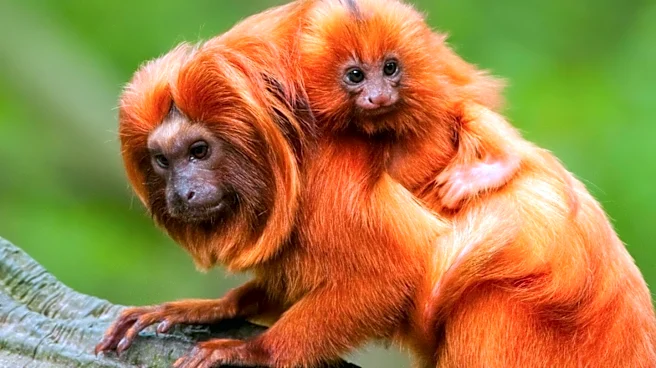
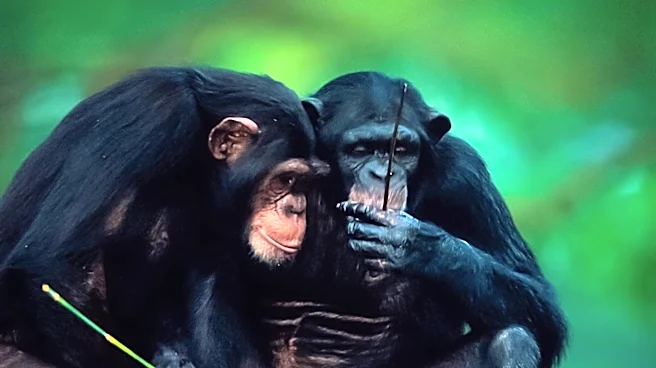
427 cases involving 88 primate species and 127 other animal species. These interactions range from grooming and playing to more complex social behaviors. The research highlights instances where primates form long-term affiliative relationships with other species, drawing parallels to human pet-keeping. The study suggests that such behaviors may not be unique to humans but have deeper evolutionary origins among primates.
Why It's Important?
The study's findings challenge the notion that pet-keeping is a uniquely human behavior, suggesting that the capacity for forming social bonds with other species may be more widespread in the animal kingdom. This research has implications for understanding the evolution of social behaviors and the cognitive abilities of primates. It also provides insights into the potential for cross-species relationships in natural and captive environments. By highlighting the complexity of primate interactions, the study contributes to a broader understanding of animal behavior and the factors that drive social connections across species.
Beyond the Headlines
The study raises ethical considerations regarding the treatment of animals in captivity and the importance of providing environments that allow for natural social behaviors. It also prompts questions about the role of human intervention in shaping animal interactions and the potential impact of habitat loss on cross-species relationships. As wildlife habitats continue to diminish, understanding these interactions may become increasingly important for conservation efforts and the management of animal populations in both wild and captive settings.