









What's Happening?
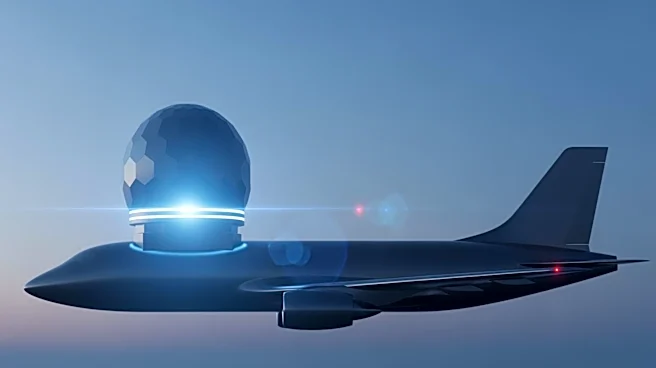
Canada has decided to purchase the GlobalEye early warning aircraft from Sweden's Saab, opting against U.S. competitors Boeing and L3Harris. This decision was announced by Prime Minister Mark Carney at the CANSEC defense trade show in Ottawa. The GlobalEye system,
which will be installed on Bombardier's Global 6500 jets, was chosen over Boeing's E-7 Wedgetail and L3Harris's Aeris X. This move aligns with Canada's strategy to reduce reliance on U.S.-made military equipment, a policy emphasized by Carney, who noted that the days of Canada spending the majority of its defense budget on U.S. gear are over. The GlobalEye aircraft will be a key asset for the Canadian Armed Forces, particularly in monitoring threats across the Arctic.
Why It's Important?
This decision marks a significant shift in Canada's defense procurement strategy, highlighting a move towards greater self-reliance and diversification of military suppliers. By choosing Saab's GlobalEye, Canada is not only reducing its dependency on U.S. military technology but also strengthening its defense ties with Sweden, a new NATO ally. This could have broader implications for Canada's defense policy and its relationship with the United States, especially given the current geopolitical climate and the U.S.'s protectionist stance under President Trump. The decision also supports Canadian industry, as the Bombardier jets will be manufactured domestically, potentially creating thousands of jobs.
What's Next?
Canada will proceed with negotiations to finalize the purchase of the GlobalEye aircraft. The decision may prompt reactions from U.S. defense contractors and could influence future military procurement strategies. Additionally, Canada is expected to continue its efforts to enhance its defense capabilities independently, which may involve further collaborations with non-U.S. partners. The establishment of a Defense Advisory Forum, as mentioned by Carney, will likely play a role in shaping these future strategies.