


What's Happening?
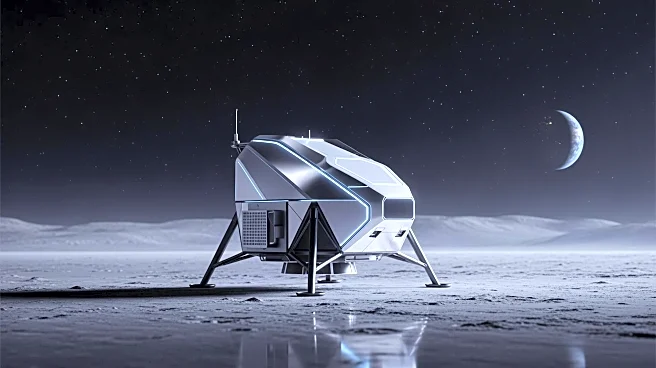
NASA has announced significant changes to its Artemis Moon landing program, introducing a preparatory step to test commercial landers in Earth's orbit by 2027, a year before the planned crewed missions to the lunar surface in 2028. This adjustment aims
to mitigate risks following recent delays and safety concerns. Concurrently, PwC's latest Lunar Market Assessment forecasts the Moon economy to generate $127.3 billion in revenue by 2050. The report emphasizes the critical role of alternative energy infrastructure, beyond transportation, in sustaining long-term lunar activities. Mihails Ščepanskis, CEO of Deep Space Energy, highlights the limitations of relying solely on solar power for lunar operations, advocating for the exploration of alternative energy solutions to support extended missions and economic potential on the Moon.
Why It's Important?
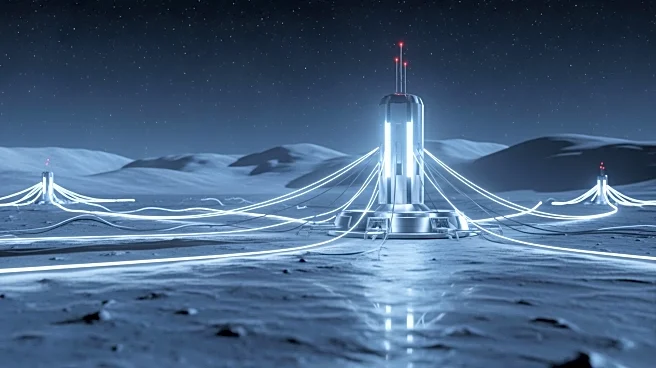
The development of a sustainable Moon economy is pivotal for future space exploration and commercial activities. The projected $127 billion revenue underscores the economic potential of lunar operations, which could drive technological advancements and create new industries. However, the success of these endeavors hinges on overcoming significant energy infrastructure challenges. The reliance on solar power is problematic due to the Moon's extended night periods, necessitating alternative energy sources like nuclear power. The U.S. and other major powers are investing in nuclear energy solutions, which could set the stage for long-term lunar habitation and exploration. This focus on energy infrastructure is crucial for enabling mobility and resource exploration, essential components of a thriving Moon economy.
What's Next?
NASA and the U.S. Department of Energy are working towards developing a lunar surface fission reactor by 2030, with other nations like Russia also pursuing nuclear-powered lunar stations. These developments are expected to provide the necessary energy infrastructure for sustained lunar operations. Companies like Deep Space Energy are advancing compact radioisotope power systems to support mobile platforms on the Moon. The success of these initiatives will depend on overcoming technical and material challenges, such as the limited availability of space-grade radioisotope fuel. As these technologies mature, they will play a critical role in enabling the mobility and resource assessment needed for a functional Moon economy.
Beyond the Headlines
The push for a Moon economy highlights broader implications for international collaboration and competition in space exploration. The development of energy infrastructure on the Moon could serve as a model for sustainable practices on Earth, particularly in remote or resource-scarce environments. Additionally, the technological innovations driven by lunar exploration could have far-reaching impacts on industries such as energy, transportation, and materials science. The ethical and legal dimensions of lunar resource utilization will also need to be addressed, as nations and companies navigate the complexities of space law and governance.