
What's Happening?
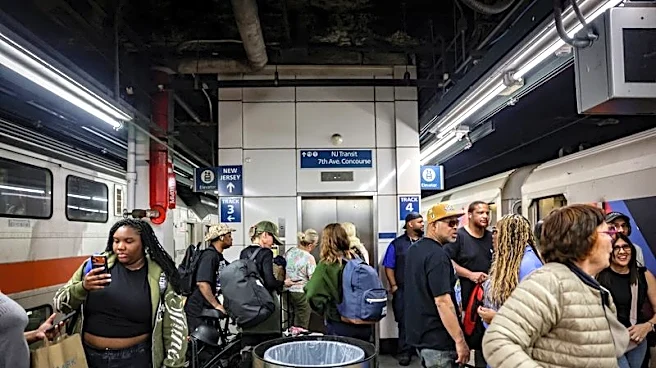
New Jersey and New York City commuters experienced significant disruptions on Friday due to a fire at New York Penn Station. The incident occurred when an Amtrak work train collided with another, sparking
a fire that led to the suspension of most rail services through the station. The fire, which broke out in the early hours, prompted a response from over 100 FDNY personnel. Five transit workers were injured, with two requiring hospitalization. Amtrak and NJ Transit services were both affected, with Amtrak resuming operations around 1 p.m. and NJ Transit shortly before that. However, delays and cancellations persisted, impacting the evening rush hour. Amtrak has promised automatic refunds and rebooking assistance for affected passengers. The cause of the fire is under investigation, with initial reports suggesting a collision between two Amtrak work trains in one of the Hudson River Tunnels.
Why It's Important?
The disruption at New York Penn Station highlights the vulnerability of critical infrastructure to unexpected incidents, affecting thousands of commuters and potentially leading to economic repercussions. The delays and cancellations not only inconvenience passengers but also strain the resources of transit agencies like Amtrak and NJ Transit. The incident underscores the importance of maintaining and upgrading infrastructure to prevent such occurrences. Additionally, the response from emergency services and the transit agencies' commitment to refunds and rebooking reflects the need for effective crisis management strategies. The ongoing investigation may lead to changes in safety protocols to prevent future incidents, impacting operational procedures and potentially leading to increased costs for infrastructure improvements.
What's Next?
As the investigation into the cause of the fire continues, Amtrak and NJ Transit will likely review their safety and operational protocols to prevent similar incidents. The findings could lead to changes in how work trains are managed and operated, particularly in high-traffic areas like New York Penn Station. Commuters can expect continued delays as services return to normal, and transit agencies may implement temporary measures to manage the increased demand. The incident may also prompt discussions on infrastructure investment and safety improvements, potentially influencing future funding and policy decisions at both state and federal levels.